Archive: October 2026 (117 stories)
Saturday, October 24, 2026
from the another-one-out-of-the-sandstone dept.
Utah keeps doing this: you turn your back on a stretch of sandstone for five minutes and it hands over a new species. The segment is short on anatomy, so treat it as the headline and watch for the paper with the proper name and the cladogram.
A short FOX 10 video report on dinosaur fossils excavated in Utah that researchers say belong to a species new to science. Local coverage of the dig in southeastern Utah describes the site as holding several different kinds of dinosaur.
from the strathspey-in-the-studio dept.
Sacramento public radio wraps a day of local news with a visit from Alasdair Fraser and family, which is the correct way to end any programme. Skip ahead past the earlier segments if you only came for the fiddle; nobody will judge.
An episode of CapRadio's daily show from Sacramento whose final segment features the Alasdair Fraser Family Band, the Scottish fiddler's family group. The earlier parts of the hour cover a congressional candidate interview and a local school district's budget.
from the which-way-is-north-again dept.

Geomagnetic reversals have been suspected of extinction crimes for decades without ever quite being convicted. This new work finds a tight cluster of flips lining up with an extinction and a flood-basalt eruption, which is still circumstantial, but it's a much nicer alibi problem for the defence.
Researchers have found an interval with an unusually dense run of geomagnetic reversals that coincides with a mass extinction and with Large Igneous Province eruptions. The authors stop short of claiming causation, but it strengthens a long-debated link between field flips and life on Earth having a bad time.
from the highest-txg-wins dept.
Not a primer so much as a set of working exhibits: you get to click Next txg and watch the uberblock ring advance, then change the sector size and see the slot count fall. If you've ever explained pool import to a colleague with a whiteboard and some hand-waving, this is the whiteboard done properly.
An interactive site that walks through ZFS on-disk structures with live diagrams, starting from the uberblock ring that each disk keeps. It shows how transaction groups write new uberblocks into successive slots and how import picks the newest valid one, with knobs such as sector size to play with.
from the multiboot-and-mixing-desk dept.
The nice trick here is that nothing gets opened up: the GBA's old multiboot feature, built so friends could share one cartridge, now ships a synthesizer straight into RAM. No soldering iron, no sacrificed consoles, just a link cable and some very period-correct bleeps.
Hackaday covers a synthesizer that runs on an unmodified Game Boy Advance by loading its code through the console's multiboot link-cable feature. Connected to a computer, the GBA boots the synth into memory and plays through its headphone jack, with controls on both the console and the PC.
from the love-apple-of-Newport dept.
Every culinary revolution needs an early adopter willing to be stared at, and in Newport it was apparently an Italian marine painter. A good small story about how a whole region came round to something the rest of us now take for granted on pizza.
The New England Historical Society tells the story of Michele Felice Cornè, an Italian-born artist who settled in Newport, Rhode Island, and is credited with persuading suspicious New Englanders that tomatoes were safe to eat. His house still stands on the street named after him in the city's historic district.
from the low-water-mark dept.
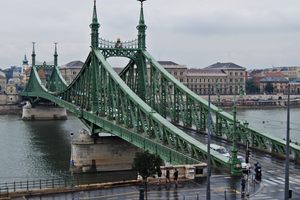
Most visitors photograph the green bridge with the vintage trams and move on. The trick is to come when the Danube runs low and look down, where the wreckage of the original span is still lying in the river.
Budapest's Liberty Bridge, between Gellért Hill and the Central Market, was originally the Ferenc József Bridge and was destroyed during the Battle of Budapest in January 1945. When the Danube is low enough, remnants of the old structure can be seen beneath the water next to its rebuilt successor.
from the not-that-Clarke-Award dept.
Worth a look mostly for the useful footnote: these are the Clarke Foundation's own honours, not the British literary prize for the year's best SF novel. Sir Arthur would probably have enjoyed the confusion, and then corrected everyone in a long letter.
File 770 lists the winners of the 2026 Arthur C. Clarke Awards from the Arthur C. Clarke Foundation, to be presented at its Unleash Imagination event on 18 November. These honour imagination and its impact in science and society, and are separate from the literary Arthur C. Clarke Award.
from the wish-you-were-weird dept.

Vienna in 1907 was busy inventing modern design, and here is one of its young artists using the humble postcard to mix medieval grotesques with bright folk colour. They look like they could have been printed last week by a very good risograph studio.
The Public Domain Review gathers postcards Rudolf Kalvach designed for the Wiener Werkstätte in 1907. They blend grotesque medieval figures and vivid folk-art palettes into designs that still read as strikingly modern.
from the waning-gibbous-objection dept.

Someone finally checked the sky against the canvas: in mid-June 1889 the moon over Saint-Rémy should have been fat and waning, not the crescent Vincent painted. Astronomy as art history, which is the best kind of pedantry.
Van Gogh's The Starry Night is usually dated to mid-June 1889 from a letter to his brother Theo. A Kyung Hee University doctoral student noticed the moon phase was wrong for that date and, using sky simulations, weather records and the painter's writings, argues for dawn on 22 July 1889, when a crescent moon, Venus and the Hyades would have been up.
from the five-men-one-microphone dept.
Chris Thile and company returning to a Connecticut college stage is the sort of news that justifies the whole favourite-artists list. Storrs is a long way from Penang, but a Punch Brothers date on the calendar is still worth knowing about, if only to imagine the Bach-to-breakdown setlist.
A local Connecticut paper notes that Punch Brothers are coming back to the Jorgensen Center for the Performing Arts at UConn in Storrs. The show is listed for 7 November 2026, part of the band's North American tour.
from the leave-it-behind dept.
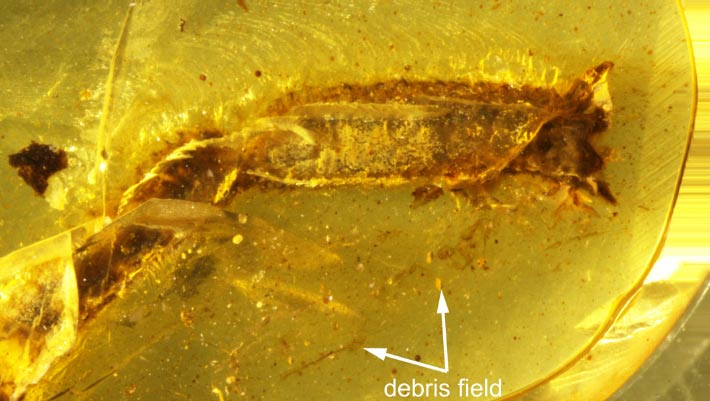
No dinosaurs this time, but the next best thing: a Cretaceous lizard frozen mid-escape in Burmese amber. Behaviour almost never fossilises, which is what makes this tiny tail-drop so satisfying; the trick it shows is one modern geckos still pull on cats.
Researchers describe a piece of Myanmar amber, about 99 million years old, preserving evidence that a lizard deliberately dropped part of its tail. It is a rare fossil record of caudal autotomy, the defence lizards still use to escape predators.
from the grand-canyon-on-steroids dept.

Mars is usually filed under geologically retired, so it is nice to see the planet's great canyon system still shifting. Worth noticing how far the evidence has to stretch: billions of years after it formed, the 4,000-kilometre scar is apparently not finished.
Scientists at Imperial College London and Columbia University report that Valles Marineris, the largest canyon in the solar system, is still tectonically active. Their work suggests faulting continues to reshape the canyon on present-day Mars.
from the palm-oil-diet dept.

Proper Malaysian field notes, just down the road from Penang: careful watching of who is actually eating the fruit and who is only picking off insects. Sparrows and Spotted Doves at the mesocarp were new even to the observer, which makes this a nice thing to look out for next time you pass a plantation edge.
A Bird Ecology Study Group post from Ipoh, Perak, records Asian Glossy Starlings, Eurasian Tree Sparrows (juveniles included) and Spotted Doves feeding on the flesh of ripe oil palm fruit. The writer notes that the fatty mesocarp is a rich energy source and that the sparrows and doves were new feeders to him.
from the fsync-is-a-promise dept.
Brooker makes the case for building animations to get an intuition for how systems fail, and picks a cracking example: one replica whose storage lies about fsync is enough for Raft to lose acknowledged writes. Anyone who has argued with a disk controller's write cache will nod along.
Marc Brooker writes about using small animations to understand distributed-system behaviour, with examples covering metastable failure and lost writes. One shows how a Raft cluster can drop committed writes when a single member's storage layer falsely reports durable fsync.
from the honey-I-shrunk-the-printer dept.
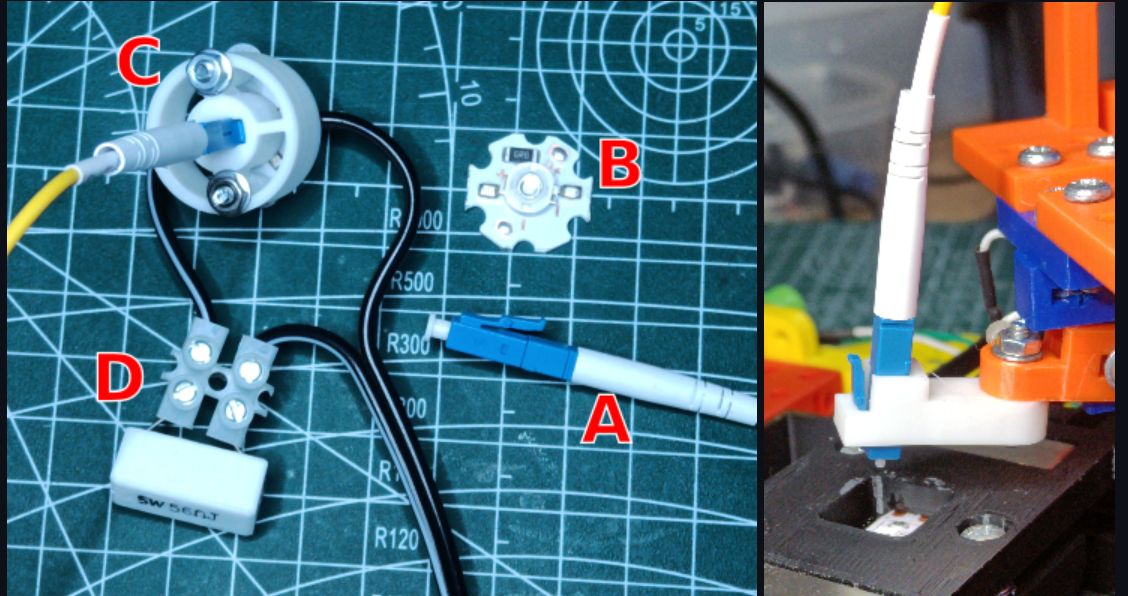
The RepRap dream of machines that build things, scaled down to the micron. The new head is mostly off-the-shelf fibre and UV LEDs, which is exactly the build-it-in-your-shed spirit; the resulting Benchy is small enough that photographing it is the hard part.
Hackaday covers the latest addition to the open RepRapMicron project: a UV print head that pipes light from a UV LED through single-mode optical fibre to cure resin in place. It reaches a resolution of around nine micrometres, demonstrated with a tiny Benchy.
from the house-lights-stay-on dept.

After a summer of nervous headlines about the Davis Square building being put up for sale, the theatre's future looks settled. A century-old single-screen-and-stage palace that also hosts folk shows owning its own roof is about as cheering as Boston real estate news gets.
Universal Hub reports that the Somerville Theatre in Davis Square has secured its future by taking ownership of its building, so it is now its own landlord. The building had been put on the market earlier in 2026.
from the condiment-monument dept.
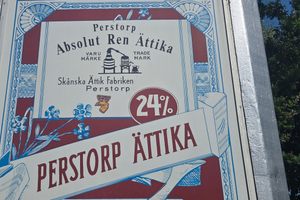
Some towns get statues of founders; Perstorp got its vinegar bottle, red cap and label included. The best detail is the 1994 unveiling, where a TV chef explained how to squeeze an egg into a bottle using vinegar, which is the most on-brand speech ever given.
Beside a main road into Perstorp in southern Sweden stands a nearly five-metre concrete copy of the town's well-known vinegar bottle. It honours a local acetic acid industry that began in 1881 using wood from nearby beech forests, and was unveiled in 1994.
from the realists-of-a-larger-reality dept.
The Le Guin Prize goes to books that imagine real alternatives to how we live, taken straight from her 2014 National Book Awards speech, so the winner is always worth a look. This year it heads to New Zealand, with a jury that includes Nicola Griffith and Fonda Lee.
The Ursula K. Le Guin Foundation has named Audition by New Zealand writer Pip Adam as the 2026 winner of its 25,000-dollar fiction prize. The award honours writers Le Guin called realists of a larger reality.
from the siege-engine dept.

A spider with a spring-loaded silk trap tuned to a single prey species, the notoriously bad-tempered green tree ant. The lovely twist is that the ants may be goaded into setting it off themselves, which is the Roman ballista, reinvented by an arachnid.
Researchers have described a new Australian ballista spider that builds a spring-loaded silk snare aimed at green tree ants. It is the first known spider whose web targets one prey species, and the first where the prey triggers the trap.
from the harmony-at-the-ballot-box dept.
Watchhouse on a hometown bill with Hiss Golden Messenger, Tift Merritt and Karly Hartzman reads like a short history of North Carolina's roots scene on one stage. That they were doing it to get out the vote for Roy Cooper's Senate run is a fine use of four-part harmony: Carrboro's finest, putting their voices to work for the ballot box.
Jambands reports that Watchhouse, Hiss Golden Messenger, Tift Merritt and Karly Hartzman of Wednesday were booked for a get-out-the-vote concert in Carrboro, North Carolina, on 23 October, hosted by Roy Cooper's US Senate campaign. The note lists the performers and the event details.
from the last-carnivore-standing dept.
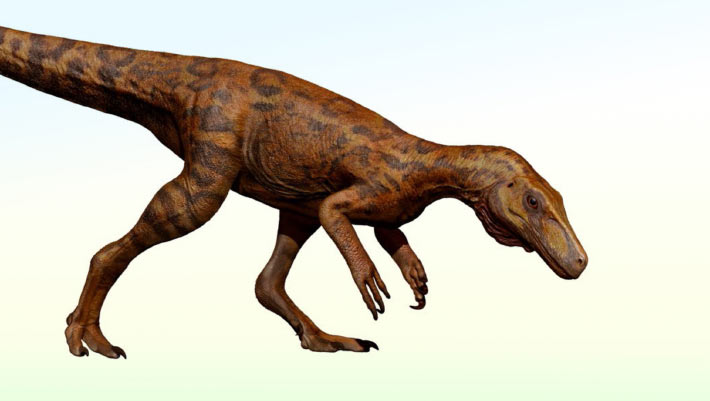
Herrerasaurids are about as close to the root of the dinosaur family tree as anyone gets, so even a single bone carries a lot of weight here. The interesting bit is not the predator itself but the ecosystem around it: the plant-eaters and cynodonts shifted, and the early meat-eaters apparently just carried on.
A Sci.News report on one fossil fragment from southern Brazil's Triassic rocks, identified as belonging to a herrerasaurid, one of the earliest large predatory dinosaur groups. Its age suggests these animals persisted after the surrounding fauna, including the cynodont Exaeretodon, had changed.
from the not-so-perfect-circle dept.

Textbook transit diagrams treat planets as tidy black discs, which is a fine approximation until a telescope is good enough to notice the edges disagree. Webb now is. The puffed-up evening side of this hot gas giant is the sort of detail that turns a dot into weather.
Researchers from Cornell and the University of Bristol used JWST transit data to show that the hot Jupiter WASP-17b has a noticeably asymmetric atmosphere, with its evening limb differing from its morning one. The Nature Astronomy paper is described as the first study of an exoplanet's lopsided shape, linked to fierce winds carrying heat around the planet.
from the skim-reading dept.
Black Skimmers are the birds that fish by ploughing the water with an oversized lower bill, which makes them a neat living sensor for what small fish are doing near the surface. Twenty tagged birds is a modest sample, but enough to show their commute changing.
Audubon and the South Shore Audubon Society report on a project that fitted 20 Black Skimmers at Lido Beach on Long Island with trackers. The movement data point to a shift in where the birds find their fish, and what that could mean for managing their nesting and feeding sites.
from the hardware-will-save-us-all dept.
Day one was the AI-and-specs day; the back half is where the workshop gets back to its usual business of storage, failures and consensus. Note the session pointedly titled 'Hardware will save us all' and the GPU-database talk that concedes two of its three problems are being fixed by the roadmap and the third is engineering.
Murat Demirbas finishes his trip report from the High Performance Transaction Systems workshop, covering sessions on hardware, object storage, failure handling, consensus and lakehouses. He summarises each talk with his own commentary, starting with NVIDIA's view of why GPUs and databases have struggled to get along.
from the opn-sesame dept.
New hardware for a 1983 home computer standard, released because someone wanted it to exist, is exactly the spirit this category is for. The Yamaha FM chip at its heart will sound instantly familiar to anyone who heard late-80s Japanese game music.
Ricardo Suzuki's Misato MSX is a do-it-yourself sound expansion cartridge built around the Yamaha YMF288 (OPN3), giving the MSX six FM channels, three SSG channels and rhythm voices. Paired with a decent DAC, it can play OPN music or be used for new compositions, with its own stereo output.
from the shiver-me-ball-bearings dept.

A Great Ball Contraption module has one job, move balls from input to output, and an infinite number of ways to fail at it in front of a convention crowd. Dressing that job up as a pirate ship adds a whole new set of hazards, and the question mark in the title suggests not all of them were avoided.
A BrickNerd story from a builder who made a pirate-ship-themed GBC module, part of the LEGO fan tradition of chained machines that pass balls along at conventions. The piece reflects on what went well and what didn't while building and running it.
from the full-steam-behind dept.
Every famous invention has an unfamous inventor somewhere upstream, and Morey has a better claim than most. Notice the range: steamboat, an early internal combustion engine and even a primitive car, all from a man most people have never heard of.
The New England Historical Society tells the story of Samuel Morey of northern New England, who built working steamboats before Robert Fulton's famous success and later patented an internal combustion engine. The article covers his dealings with Fulton and why credit went elsewhere.
from the set-in-stone dept.
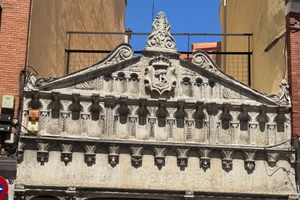
Heritage rules usually save whole buildings; here they saved only the front, which leaves an ornate stage-set of arches and shells bolted onto an ordinary street. Fitting, somehow, for a shop that made funerary monuments.
Near Madrid's Plaza Mayor, on Calle Concepción Jerónima, stands the elaborate carved façade of Mármoles Molina, a former business that made tombstones and funerary monuments. When the building behind it was demolished, the protected frontage had to be rebuilt in place, so it now fronts a very different interior.
from the rub-it-in dept.

Friction is the villain of every physics homework problem, which is why it is fun to read someone who studies it for a living make the case for it. Tribology underpins everything from bearings to brakes, and the essay takes it all the way out to the stars.
An Aeon essay by tribologist Jennifer R Vail on the science of surfaces rubbing together. She argues that friction, far from being a nuisance to be eliminated, has been essential to human progress, from the wheel onward, and shows up at astronomical scales too.
Friday, October 23, 2026
from the fsync-and-pray dept.
Nur flagged this one as really good, and it is: the view from userspace's heaviest customer, delivered by the person who keeps getting paged when the kernel moves under him. Note the fsyncgate scar tissue and the unexpectedly warm words about working with the io_uring side. Anyone who has been on the other end of an 'application regression' report will recognise both sides of this.
Jonathan Corbet's write-up of Andres Freund's Kernel Recipes talk on what PostgreSQL has to work with, and around, in Linux. Freund recounts the 2018 discovery that I/O errors could silently lose data, recent io_uring breakage for multi-process programs, and the steady churn of performance changes, then asks how the kernel could serve database workloads better.
from the reach-for-the-stars dept.
No dinosaurs tonight, but this goes much further down the family tree. The textbook picture of a worm-like burrower at the root of the starfish and acorn-worm lineage takes a knock from a Chinese Cambrian fossil. Worth noticing how much a single well-preserved soft body can rearrange a branch of the tree.
Researchers describe Yujingia glutenotunica, an early Cambrian ambulacrarian from China. Its anatomy points to a common ancestor of starfish, sea urchins and their kin that sat in the water feeding with tentacles, rather than burrowing through sediment like a worm.
from the not-so-cosmological-constant dept.
Type Ia supernovae gave us dark energy in the first place, so it is fitting that a big pile of them is now poking at whether it holds still. This joins a growing set of results nudging against the cosmological constant. Not a revolution yet, but the error bars are getting interesting.
A new analysis of 2,884 exploding stars adds evidence that dark energy, the force behind the universe's accelerating expansion, may weaken or strengthen over cosmic time instead of staying constant. If it holds, a core assumption of the standard model of cosmology would need revisiting.
from the up-past-your-bedtime dept.

A familiar squat shape at dusk in Penang's mangroves and fish ponds, and it turns out the bird has an odd research footnote or two. Watch for the curious nestling sex-ratio study. A good reminder that the commonest birds are often the least looked at.
A 10,000 Birds profile of the Black-crowned Night Heron, found on every continent bar Australia and Antarctica. It rounds up the species' many nicknames and some of the science, including a small study in which most nestlings examined were male, with no link found to nest site, timing or brood size.
from the can-you-hear-me-now dept.
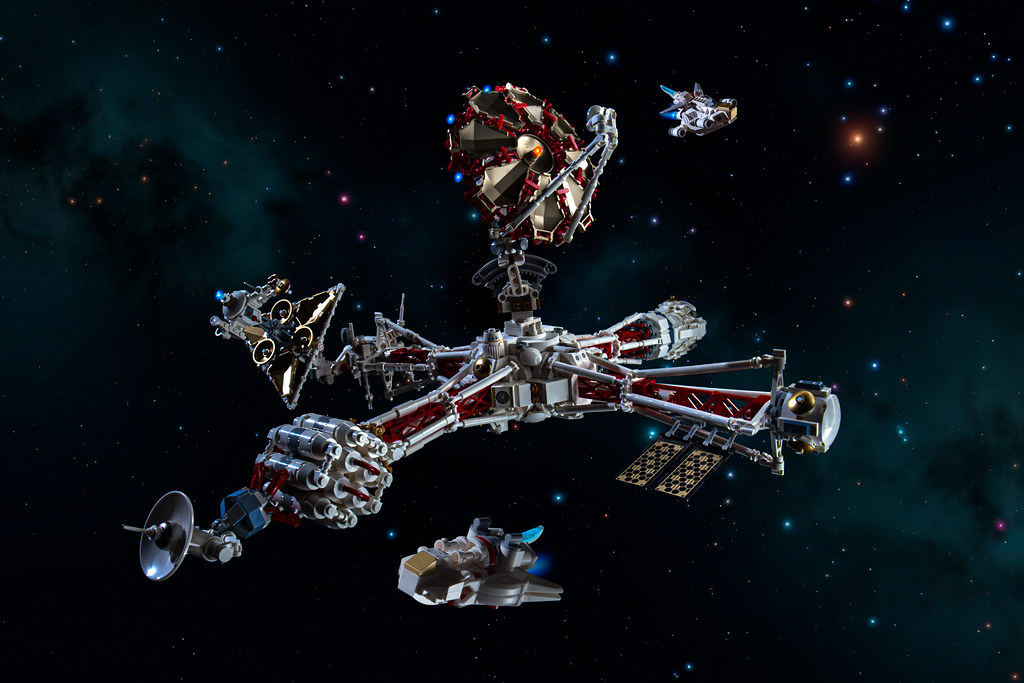
Hard sci-fi in LEGO means trusses, dishes and no swooshable fighters, and this one commits. The main radar dish is the part to study: nine red bicycle frames hooked together by their handlebars. Parts usage like that is why people keep the odd bits in a separate drawer.
Part of a builder's ongoing homebrew hard sci-fi theme, this space station is built around communications dishes and sits beyond the Kuiper Belt as a relay for deep-space travel. The main dish frame is made from nine bicycle frames arranged in a ring.
from the are-we-there-yet dept.
Long before turnpikes and rest stops, a Boston schoolmistress set off on horseback for New Haven and New York, and kept a sharp-tongued journal of the inns and guides along the way. Her account is one of the best windows we have on everyday colonial travel. Imagine the Yelp reviews.
In 1704 Sarah Kemble Knight, a 38-year-old Boston widow, teacher and businesswoman, made the long horseback trip from Boston to New Haven and on to New York on family business. The New England Historical Society retells the journey and the journal she kept, later published and still read for its picture of colonial roads and taverns.
from the mother-church-picking-party dept.
Look at that roster: Stuart Duncan, Michael Cleveland, Jerry Douglas, Sierra Hull, Molly Tuttle, Edgar Meyer and more on one stage. The studio album already won a Grammy; this captures the night they played it straight through at the Ryman. Plenty here for anyone who follows the Punch Brothers end of the pool.
Folk Alley reviews a new 3-LP or 2-CD set recorded at the Ryman Auditorium in January 2022, when Béla Fleck and an all-star band performed his Grammy-winning album My Bluegrass Heart in full. The reviewer praises how crisply the recording catches the night.
from the please-do-not-fall-off-the-edge dept.

A curiosity for the shelf next to the hollow-Earth maps. Samuel Rowbotham, writing as Parallax, built a whole 'zetetic' method out of looking down a Fenland canal and trusting his eyes. The diagrams are earnest and lovely, and it is a useful study in how a confident wrong idea gets built to last.
The Public Domain Review presents Zetetic Astronomy, the 1865 book by the pseudonymous Parallax that did more than any other to bring flat Earth ideas back into circulation in modern times. Its illustrations lay out an Earth as a disc, with arguments built from simple observation.
from the see-also-disgraceful-act dept.
Every database person has met an indexer like Samuel Palmer, who classified stories by how they made him feel. It took decades before a reader noticed and wrote in. A short, perfect read about why metadata needs a schema.
In the 19th century the index to the London Times was compiled by Samuel Palmer, who filed articles under his own emotional headings. A reader pointed it out in 1890: a boy who stole a twopenny pie appeared under Atrocious Criminal, and a chapel that drifted from its moorings under Disgraceful Act.
from the it-measures-amps-and-imps dept.
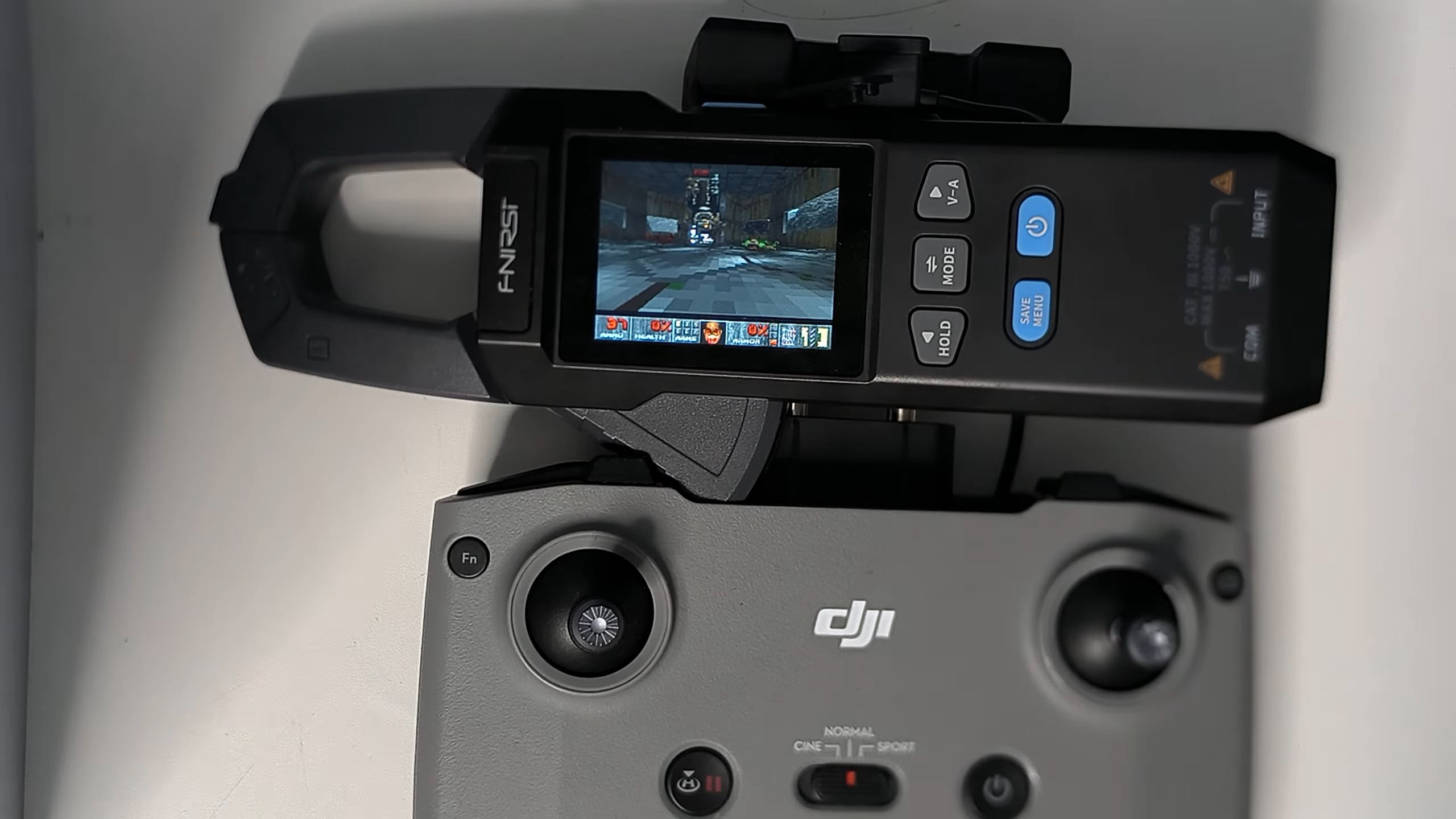
The 'does it run DOOM' question gets a new answer, and this one is impressive on memory alone: 32 KB is a fraction of the 4 MB the original wanted in 1993. The whole first Freedoom episode is there, saves and all. The drone-controller gamepad is the cherry on top.
Artur Bieniek got the doomgeneric engine running on a roughly 30-dollar FNIRSI clamp meter, whose Artery microcontroller runs at 150 MHz but has only 32 KB of RAM. All nine maps of Freedoom's first episode play in colour on the 320 by 240 screen, with buzzer sound effects and controls from a drone remote.
from the niche-interest dept.
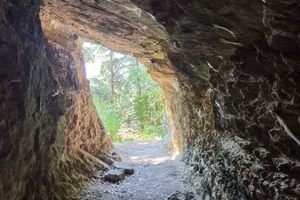
San Marino is mostly visited for its towers and its stamps, but just outside the walls is a rock niche that people prayed at from the Iron Age to late antiquity. The finds are the moving part: little terracotta arms and fingers left as offerings. A quiet stop on the way between the towers.
Grotta Tanaccia is a shallow niche in the cliff face of Monte Titano near Montale Tower, used as a place of worship from the Iron Age through Roman and late-antique times. Excavations turned up bronze votives, terracotta body-part offerings and over a hundred coins, now displayed in the State Museum of San Marino.
from the think-globally-read-locally dept.

Nur's note calls it brilliant, and the idea earns it: take the world's largest reference work and throw away everything you couldn't walk to before your tea goes cold. It turns the encyclopedia back into what old county gazetteers were, a guide to the ground under your feet. Worth trying from Penang to see which forgotten shophouse or temple has an article nobody reads.
A small web toy by Ed Jefferson that shows only the Wikipedia articles about places and things within roughly thirty minutes on foot of where you are. It works as a map-driven browser for local history, landmarks and oddities you have probably walked past.
from the some-assembly-in-reverse dept.
Most of palaeontology happens long after the dig, with dental picks and air scribes and a great deal of patience, and usually behind a closed door. Raleigh is putting that slow work in front of the public. Late Cretaceous, so a few million years older than the museum's famous T. rex.
A large block holding a roughly 75-million-year-old dinosaur has been moved into the North Carolina Museum of Natural Sciences in downtown Raleigh. Visitors will be able to watch as the fossil is gradually prepared out of the stone.
from the every-cloud-has-a-volcano-lining dept.

Every Martian summer morning a cloud the length of a small continent unfurls west of Arsia Mons, then vanishes by lunch, and for decades nobody could make the atmospheric models reproduce it. A new paper offers a mechanism that textbook cloud physics hasn't had a real example of before. Weather that keeps a schedule better than most airlines.
Scientists led from the Sorbonne report in Nature Geoscience a possible explanation for the Arsia Mons Elongated Cloud, a thin white plume up to 1,800 kilometres long that forms daily beside the extinct volcano during Martian summer. Mars Express has watched it for years, and the study suggests it may be the first natural example of a cloud process previously only theorised.
from the a-little-help-from-my-boobies dept.

A pleasant reversal of the usual climate story: the birds are part of the engineering. Seabirds haul nutrients from open ocean to roost, and that fertiliser feeds the reef that builds the island. Keep the native trees and the rats out, and the atoll can keep pace.
A study in Science Advances traces how nutrients in seabird droppings move through the land and reef ecosystems of low-lying atolls. Islands with healthy native forest and large seabird colonies appear better able to build and maintain the reef structure that keeps them above rising seas.
from the nuts-about-macaranga dept.
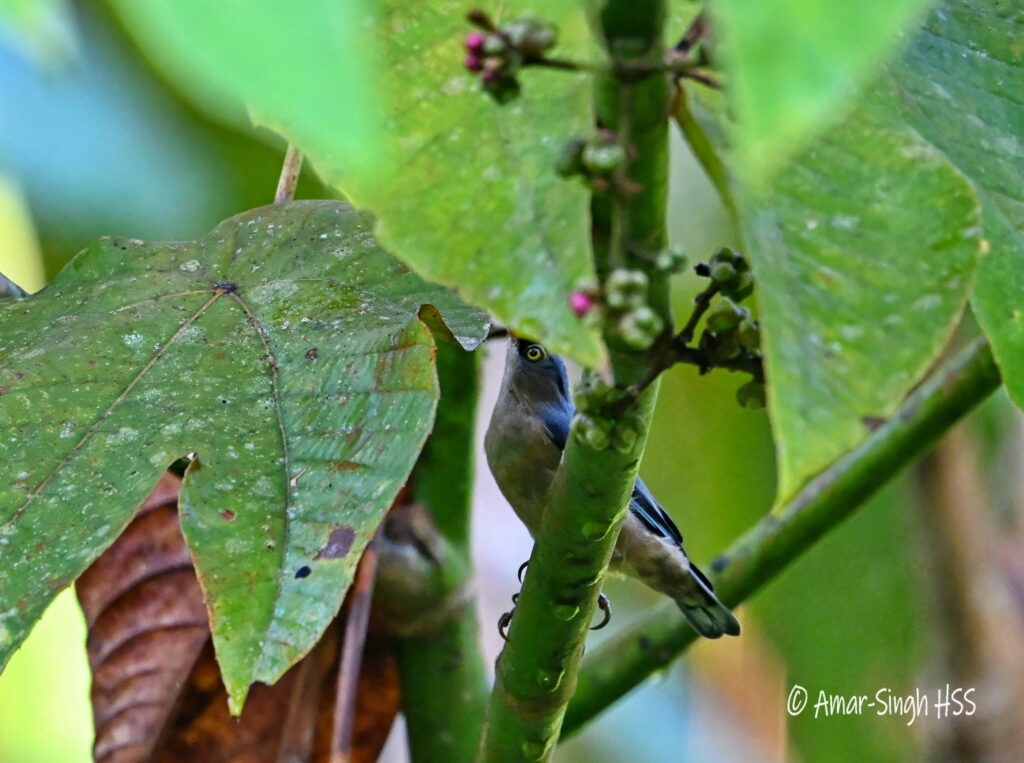
The sort of note only a patient local birder produces: decades watching one species, then one morning it does something off-script. It's a Peninsular Malaysia record, a short drive from Penang, and a good reminder that field guides are drafts. Bring binoculars to the next fruiting Macaranga.
An observer near Ipoh, Perak, describes a lone male Velvet-fronted Nuthatch, usually seen in pairs or family groups, snatching a fruit from a Macaranga bancana tree and flying off with it. The behaviour is unusual for a bird thought of as an insect-gleaner, and the writer suggests it may have been feeding nestlings.
from the magnets-how-do-they-walk dept.

M-Tron got magnets, red and black and that lovely trans-neon green, but never a pair of legs. Luna S has fixed the oversight with a dense, playable mech that keeps the classic-space rule of features everywhere. Bonus points for the little autonomous walker riding on its back.
Builder Luna S has made a walking mech in the colours and spirit of M-Tron, the 1990 LEGO space faction whose nine sets never included a walker. It carries the theme's customary magnet crane, a smaller detachable walker on top and plenty of hidden play features.
from the parlez-vous-paper-mill dept.
Forget dropped r's and 'wicked'. In Berlin, up in the North Country, French Canadian mill families and their English-speaking neighbours cooked up a mixed vernacular odd enough that someone wrote a dictionary of it. A nice reminder that New England speech has more layers than the Boston accent.
The New England Historical Society looks at the local speech of Berlin, New Hampshire, shaped by the French Canadians who came to work in its paper mills. It covers the blend of French and English that took hold there and the dictionary compiled to record it.
from the system-360-comrade dept.
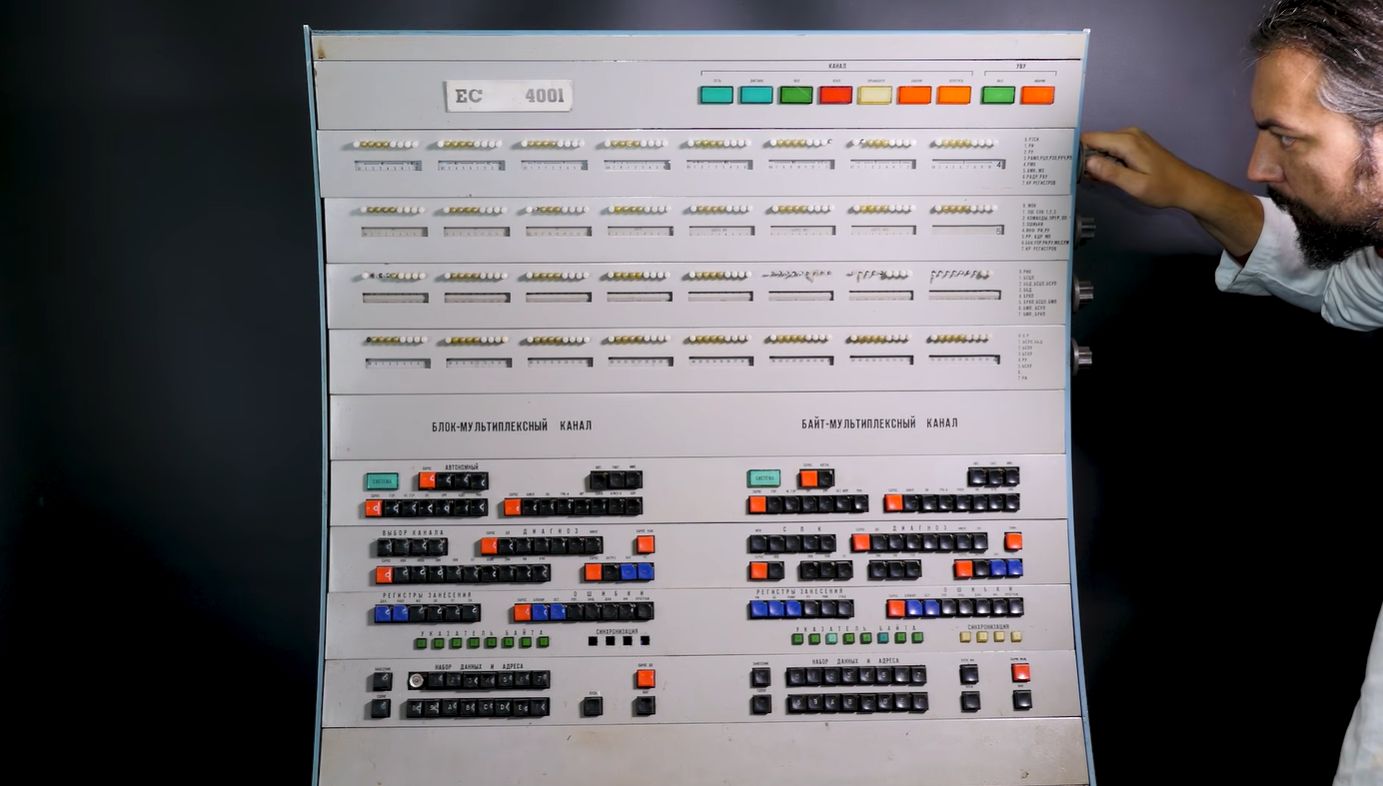
The Soviet ES EVM line cloned IBM's System/360 and 370, yet the hardware ended up quite unlike the originals, and only a few hundred of these machines were built. This team nursed a battered front panel back into working order and explains the switches along the way. Lamps-and-toggles restoration in its purest form.
A YouTube group interested in Soviet technology restored an early-1980s control panel from an ES-4001, one of the USSR's IBM-compatible mainframes. Their interest started at the Duga radar site near Chornobyl, whose ES-1060 was never commissioned; this panel came from an ordinary data centre and needed repair after being ripped out of its machine.
from the roll-for-isolation dept.
Paul McKenney's 1990 trick is one of those algorithms that looks too cheap to work: hash flows onto a fixed number of queues, rehash now and then, and noisy neighbours mostly stop hurting everyone else. Brooker walks through why the odds are so good and where it fits in modern multi-tenant services. Familiar from the qdisc side, worth seeing argued from first principles.
Marc Brooker revisits Stochastic Fairness Queuing, which approximates per-client fair queuing with a constant number of queues and constant work by hashing clients onto them. He explains how that probabilistic isolation limits the damage from misbehaving tenants and why he counts it among his favourite small distributed-systems algorithms.
from the tread-softly-on-my-teal dept.
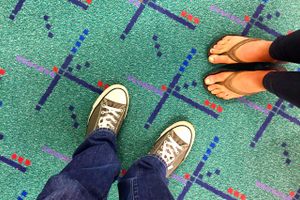
Only Portland would give a floor covering a public memorial. The 1987 teal carpet with its runway-map pattern turned into a civic mascot, found on socks, beer labels and the occasional tattoo, and when it was retired the city decided it deserved a send-off. A pilgrimage site for anyone who has photographed their shoes in an airport.
A sign on the side of a downtown Portland, Oregon hotel commemorates the carpet that covered Portland International Airport from 1987. Its geometric pattern, inspired by the airport's intersecting runways and taxiways, became a beloved local symbol before it was replaced.
from the dwarf-planet-renewer dept.
Holst finished The Planets in 1918, a dozen years before Pluto turned up, so in 2000 Colin Matthews composed an eighth movement to complete the set. Six years later the IAU demoted the planet, leaving the music orbiting an awkward category of its own. Bad timing, as a sub-genre of musicology.
A short Futility Closet note on Pluto, the Renewer, the movement Colin Matthews added to Holst's The Planets in 2000. It was written to cover the world discovered after Holst's suite premiered, only for Pluto to be reclassified as a dwarf planet in 2006.
from the family-reunion-gets-awkward dept.
Every few years a new tyrannosaur turns up and the family tree has to be redrawn in pencil again. This one is billed as a relative of T. rex that doesn't sit where the textbook says it should. The pool only carried the headline, so the details of which bones and which branch are behind the link.
New Scientist reports the discovery of a newly identified relative of Tyrannosaurus rex. According to the report, the find challenges the accepted account of how the tyrannosaur lineage evolved.
from the dark-side-of-the-moon-was-just-shy dept.

The near side is all dark lava seas, the far side is pale and cratered, and nobody has had a really satisfying reason why. Now there are actual rocks from the far side to argue with, which beats modelling in the dark. Notice that Earth itself is the culprit here: the tidal tug of the home planet may have stirred the young Moon's interior unevenly.
Using the first samples ever returned from the lunar farside, researchers propose an explanation for why the Moon's two hemispheres look so different. Their results suggest Earth's gravity heated the early Moon unevenly, driving huge flows of magma that shaped the contrasting landscapes.
from the here's-looking-at-you-guillemot dept.

Low-tech, slightly absurd, and it works: a spinning pair of big eyes on a pole, or a kite shaped like a bird of prey, hovering over the nets. Guillemots and razorbills dive for fish and can drown in gillnets, so anything that makes them think twice is a win. The kite version did better, which tells you something about what an auk fears most.
A study off the Cornish coast tested two scare devices on gillnets: buoys topped with spinning oversized eyes and kites made to look like raptors. Both cut the chance of catching diving auks, with the kites reducing the odds by about 71 percent and the eye buoys by about 59 percent.
from the one-step-at-a-time dept.
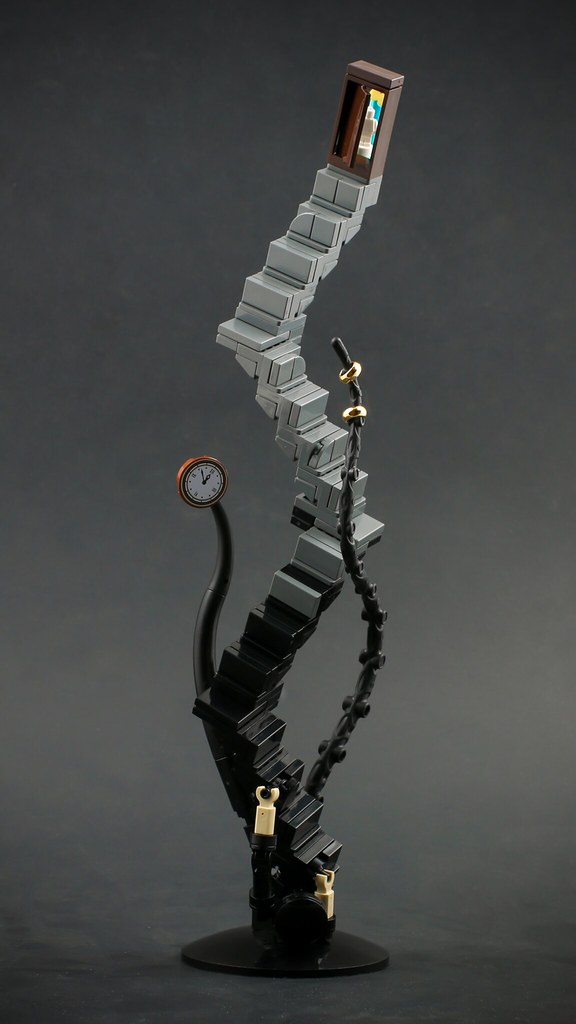
Eli Willsea has a knack for vignettes that tell a whole story in a small footprint, and this one is about as direct as a build gets: a lone figure at the foot of a stair, darkness below, light above. The builder ties it to his own faith, but the image works on anyone who has had a hard stretch. Look at how the lighting does most of the storytelling.
Builder Eli Willsea's latest LEGO creation is a dramatic staircase rising from shadow toward light, with a small figure at the bottom trying to make the climb. The Brothers Brick looks at the build and the personal meaning the builder attached to it.
from the fiddle-me-this dept.
Alasdair Fraser coming to a Northeast Kingdom arts centre is exactly the sort of small-town show that makes New England folk life so good. The Scottish fiddle master has been a cornerstone of the Celtic revival for decades. If you can't be in St. Johnsbury, at least it's a nudge to put on one of his records with Natalie Haas.
The local paper in Vermont's Northeast Kingdom announces an upcoming concert by the Alasdair Fraser Band at Catamount Arts in St. Johnsbury. Fraser is the celebrated Scottish fiddler known for his long partnership with cellist Natalie Haas.
from the conquer-or-dye dept.
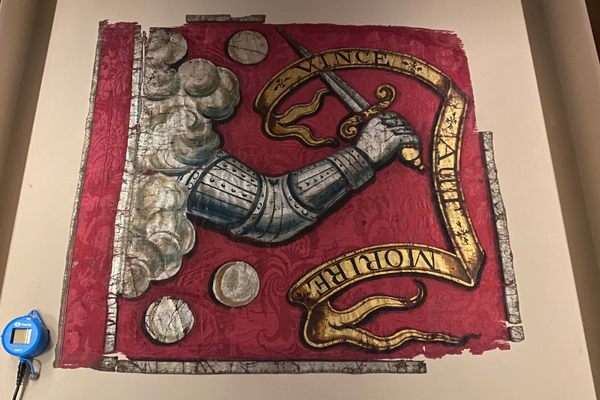
Just up the road from Concord and Lexington sits a flag that predates the Stars and Stripes and is still in one piece. Crimson silk damask, an armoured arm reaching out of a cloud with a sword, and a Latin motto with no room for compromise. Its exact age is still argued over, which only adds to the charm.
Atlas Obscura visits the Bedford Flag in Bedford, Massachusetts, said to be the oldest complete flag surviving in the United States. Made of crimson damask painted in silver and gold, it shows an armoured hand gripping a sword beneath the motto Vince Aut Morire, Conquer or Die.
from the video-killed-the-radio-format dept.

There is a whole generation of perfectly good internet radios going deaf because stations moved to newer streaming formats. Clifford Farrugia's answer is pleasingly small: a Raspberry Pi in the corner that translates the new streams back into plain old MP3. This is the late-90s spirit in miniature, one person keeping a gadget out of the landfill and sharing the fix.
Many older internet radio appliances can't play stations that have switched to HLS streaming. The open-source HLS Radio Converter runs on modest hardware such as a Raspberry Pi and re-serves those streams as ordinary HTTP MP3 streams that the old radios understand.
from the lookout-below dept.

A map drawn as a circle makes perfect sense once you picture the person using it: a lookout in a tower, turning slowly to scan the horizon for smoke. These were made for Maine's fire towers about a century ago, so they double as a New England curiosity. Maps built around a single point of view are always worth a slow look.
The Public Domain Review presents Archie G. Norcross's forest fire maps of Maine from 1918 to 1922. Each was drawn in the round for a specific fire tower, helping lookouts pinpoint smoke across the surrounding wilderness.
from the small-but-perfectly-formed dept.

Anything new from the author of Jonathan Strange and Mr Norrell is an event, even when it's only a short story and an essay. Reactor's reviewer argues the little volume is more than the sum of its parts. Consider it a pocket-sized return to Clarke's England, footnotes of the soul included.
Reactor reviews The Bishop of Durham Attempts to Surrender the City, a slim new book from Susanna Clarke pairing a short story with an essay. The reviewer finds it slight in size but substantial in effect, in keeping with the rest of her work.
from the early-birders dept.
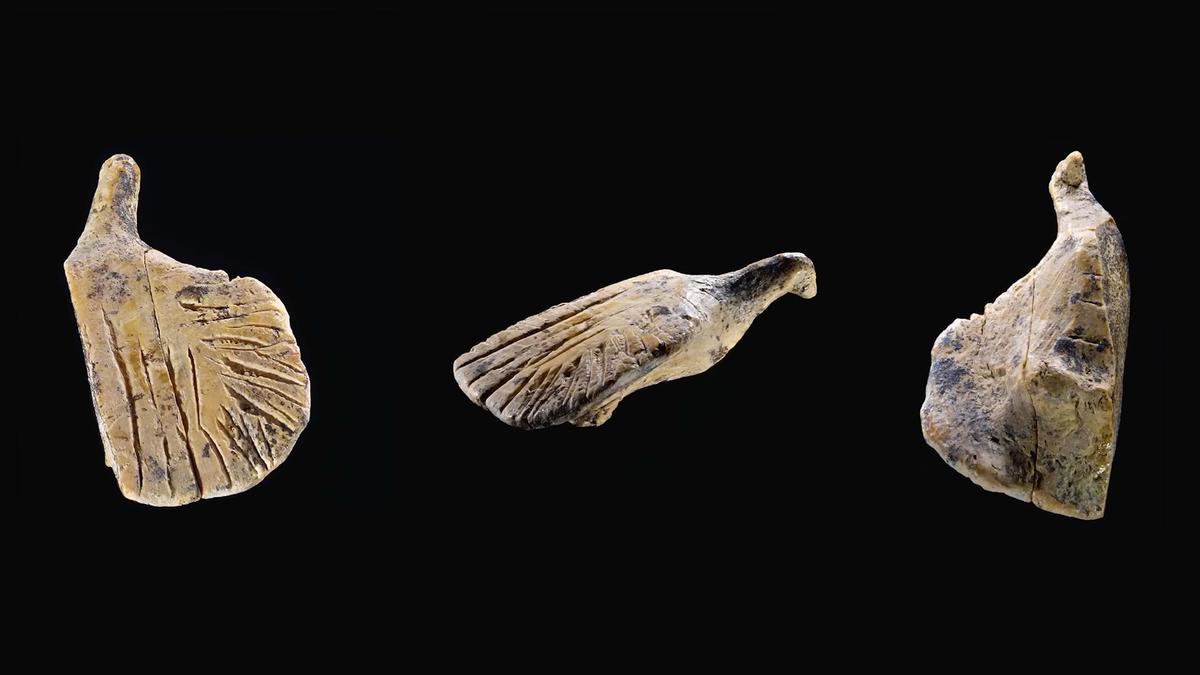
Tens of thousands of years ago someone in a German cave carved birds, which makes them birders of a sort. Aeon's short film uses the Hohle Fels finds to ask why our species thrived where Neanderthals faded, and suggests that making art was part of the answer. A quiet reminder that people have been looking hard at birds for a very long time.
An Aeon video explores the Hohle Fels cave in southern Germany and the bird figurines found there from the Ice Age. It considers what those objects say about the symbolic lives of early modern humans and the role art may have played in their success.
from the calamari-bulk dept.
Not a dinosaur, but it swam above their heads, and the nickname alone earns it a slot. Belemnites are the bullet-shaped squid cousins every fossil shop sells by the bucket, which makes a barrel-shaped one from a family thought long gone all the more fun. Worth noticing: the shape hints at a different lifestyle, perhaps hunting smaller cephalopods.
Researchers have described the stoutest belemnite yet found, a squid relative from the seas that covered Wyoming about 160 million years ago. The rare fossils show a barrel-shaped animal unlike known belemnites, possibly a predator of smaller squid-like creatures and a late survivor of a lineage thought to have died out.
from the dark-energy-side-quest dept.

Euclid was built to map the dark universe across billions of light years, so it is quietly charming that it also tripped over a fresh snowball in our own backyard. Survey telescopes that stare at everything tend to find things nobody asked them to; this is that tradition, continued.
ESA's Euclid space telescope has spotted its first previously unknown comet, picked out in images it took between 16 and 24 September 2026 while carrying out its main cosmological survey.
from the sonic-boom-over-the-Cape dept.
Remember the May boom that rattled windows and startled birds all along the Cape. MIT's Haystack people and colleagues pooled an unusually large pile of ground and satellite data to work out where the rock came from. Nice local detective story with a solar-system-sized map at the end.
Researchers including a team at MIT's Haystack Observatory traced the superbolide that exploded over Cape Cod Bay on 30 May. Their preprint describes a dense, strong, possibly iron-rich meteoroid whose earlier orbit reached out past Mars.
from the some-assembly-required-in-3000-BC dept.
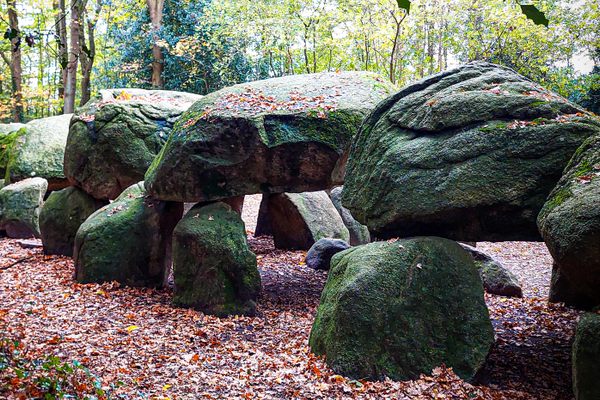
Drenthe's hunebedden are the Netherlands' answer to anyone who thinks the country is all polders and bicycles. D27 is the largest of them, older than Stonehenge, topped by a capstone of roughly twenty tonnes, and an easy walk from the Hunebedcentrum. A good excuse for a day trip out of Amsterdam.
D27 in Borger is a Neolithic passage grave more than 22 metres long and over 5,000 years old, the largest dolmen in the Netherlands. It carries the heaviest capstone known on a Dutch dolmen and was the site of the first recorded excavation of one, in 1685, though much of it is still undisturbed.
from the one-page-to-rule-them-all dept.

Somewhere Tolkien, who redrew his own maps obsessively, would approve of the sheer stubbornness. Over a thousand artists hand-drew Fellowship of the Ring shot for shot, all three hours, 120,000 pages. The first 11 minutes are out; mute it and play the film underneath for the full effect.
Animator Andy Bailey coordinated more than a thousand artists for over a year to make a hand-drawn flipbook version of Peter Jackson's Fellowship of the Ring. The complete film runs to some 120,000 drawn pages, and the first eleven minutes have been released, without the film's soundtrack.
from the future-as-it-used-to-be dept.
Omni was where hard science, airbrushed space art, very questionable parapsychology and genuinely great short fiction shared a binding. Gibson's early stories ran there, which is reason enough to go digging. Settle in; this is a long afternoon of retro-futurism.
The Internet Archive holds an archive of Omni, the US and UK magazine that mixed science articles, parapsychology and short science fiction and fantasy from 1978 to 1995. Kottke points to the collection.
from the fiddle-in-the-current dept.
New Laura Cortese means it goes in, no committee vote needed. The fiddler and songwriter behind the Dance Cards, long a fixture of the Boston scene, has a new record out, and here is a review to read before putting it on.
Americana Highways reviews Lucky Water, the new album from Laura Cortese, the fiddler, singer and songwriter known for her work with the Dance Cards.
from the sibling-counterpoint dept.
Cello and fiddle, two sisters, and decades of playing in each other's pockets. Brittany you know from Hawktail and Crooked Still, Natalie from her long partnership with Alasdair Fraser; this is the two of them together again on a second duo album.
Jambands reviews North Node, the new album by Natalie Haas on cello and Brittany Haas on fiddle, released on Padiddle Records as a follow-up to their first duo record.
from the alexandria-unplugged dept.
Live write-ups are the next best thing to being in the room, and the Birchmere is about as good a room as American folk has. Aoife on 12 October, with DC duo the Sweater Set warming things up.
Parklife DC reviews Aoife O'Donovan's 12 October 2026 show at the Birchmere in Alexandria, Virginia, where the Sweater Set opened.
from the ten-years-downstream dept.
Undercurrent was the record that won Jarosz her first Grammys, and a decade on she is taking it back on the road. This profile catches her on the California leg, looking back over the career so far.
Monterey County Weekly talks to Sarah Jarosz about her fall 2026 tour marking ten years since her album Undercurrent, and about looking back on her career as she plays it.
from the lake-kariba-park dept.
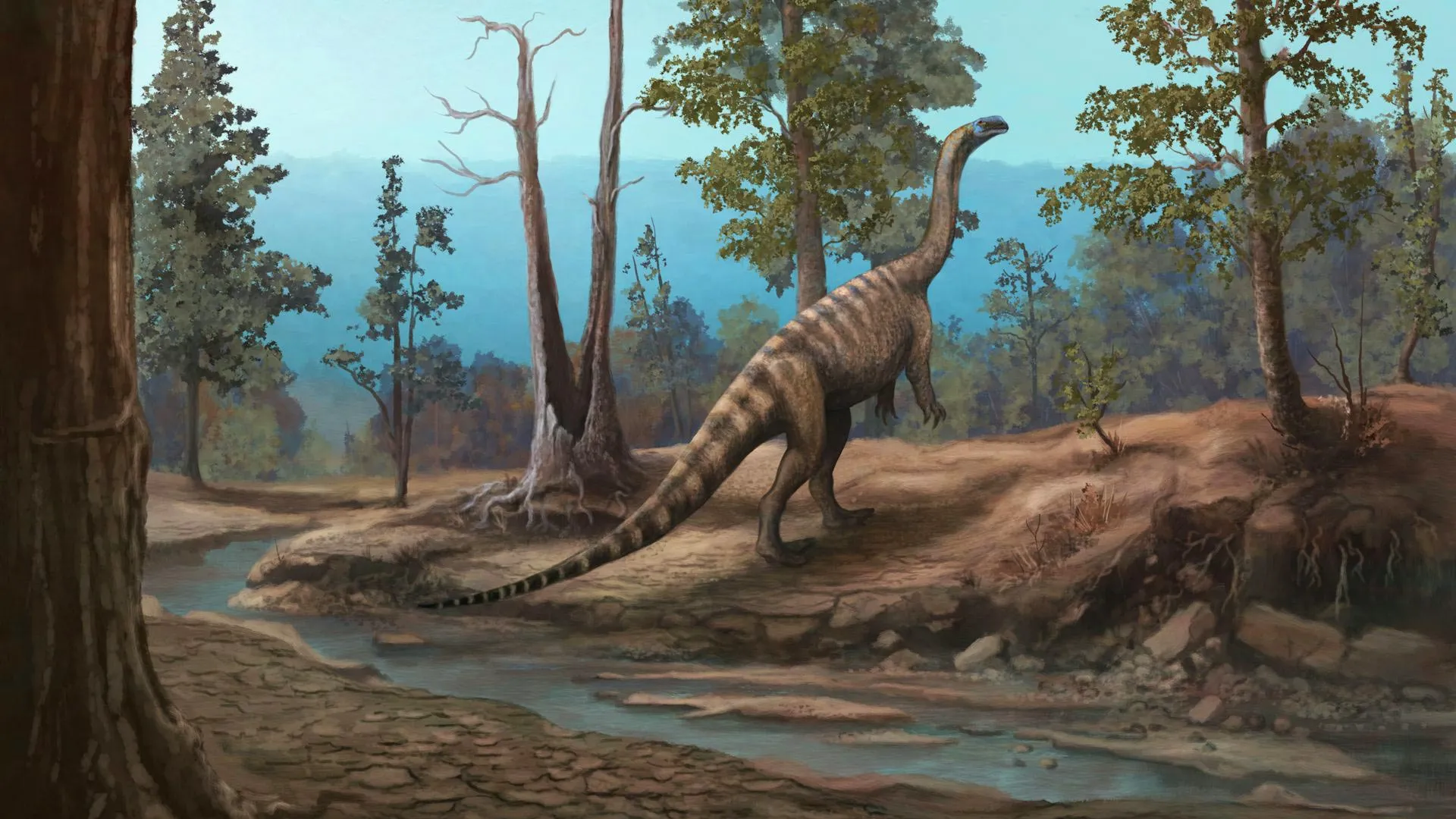
Fresh dinosaur news from somewhere that rarely makes the headlines: Zimbabwe, 210 million years ago. The interesting bit is not the skeleton itself but the argument that Zimbabwe's early dinosaurs were a different crowd from the ones down south, possibly because the climate differed. The story is written by the lead palaeontologist himself.
Paul Barrett of the Natural History Museum and colleagues describe Musango matusadonaensis, a two-legged plant-eater about 4.5 m long known from a partial skeleton found on a riverbank in Matusadona National Park. Growth rings show it was not fully grown. Along with Musankwa, named in 2024, it suggests the Late Triassic dinosaurs of Zimbabwe differed from South Africa's.
from the snowbird-archosaur dept.
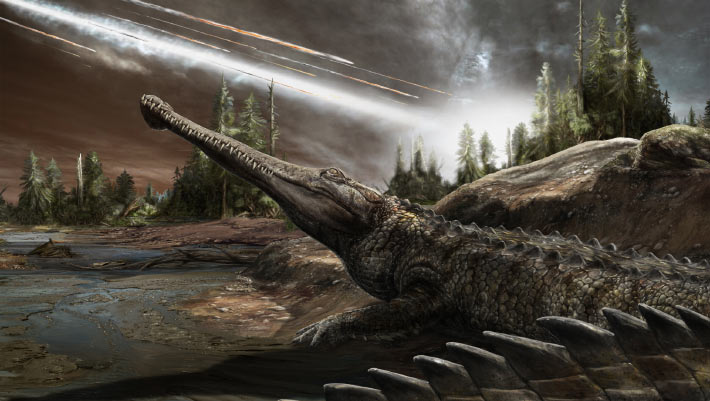
The other branch of the archosaur family tree gets its turn. A UCL team argues that crocodile-line reptiles never really adapted to new climates; they just moved whenever the world warmed or cooled. That same habit may be why they made it through the asteroid when their dinosaur cousins did not.
Alfio Alessandro Chiarenza and Philip Mannion combined a tree of over 400 pseudosuchian species with thousands of fossil sites and living-crocodile records. They found the group kept a stable preferred climate, around 23 C for the ancestor, and shifted range rather than adapting. Climate models of the end-Cretaceous aftermath show warm refuges near the equator that could have sheltered them. The study is in Science Advances.
from the morning-on-sol-4982 dept.
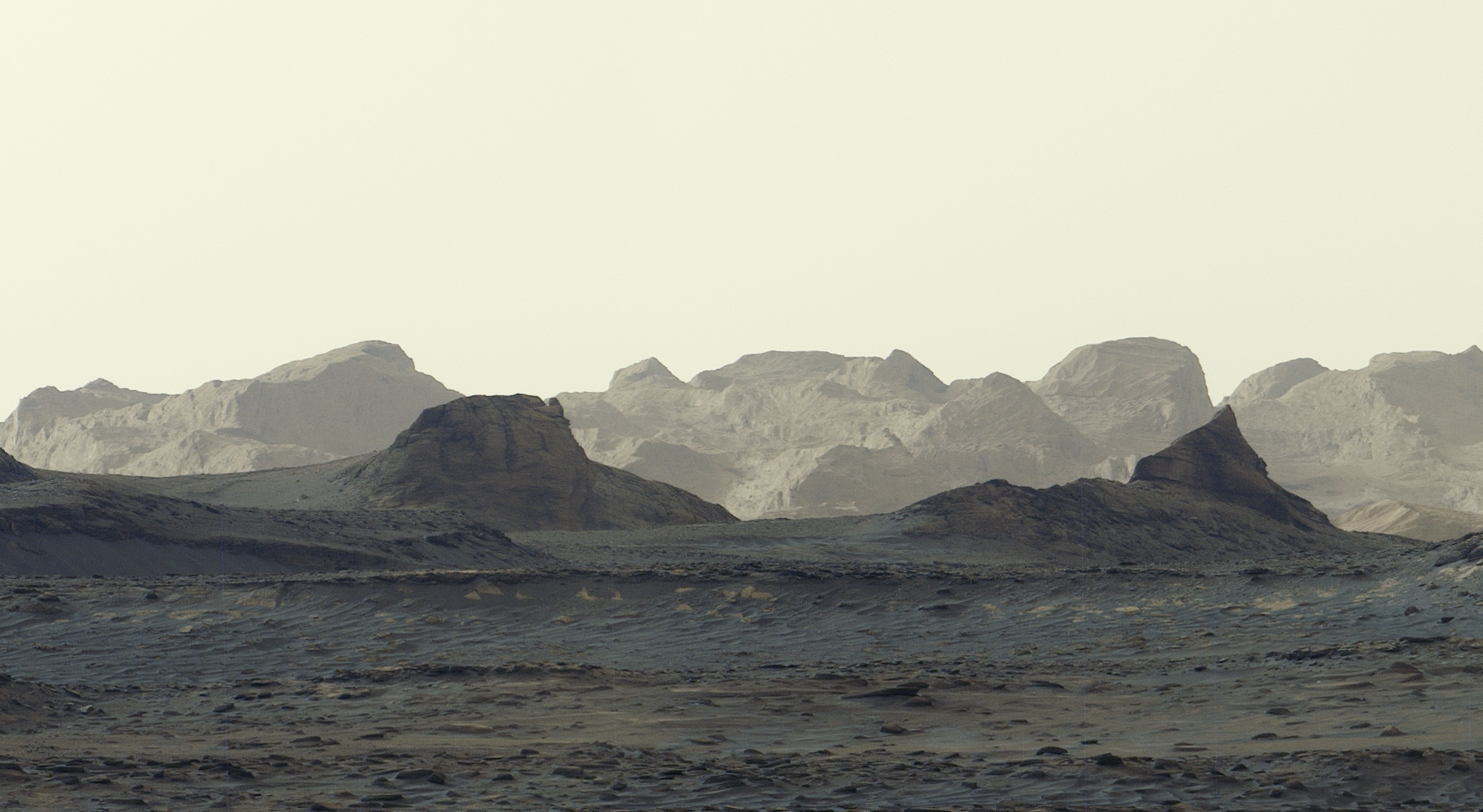
A pretty picture with a geology puzzle attached. The yardangs on Mount Sharp are the wrong colour and their layers tilt oddly, and one idea is that they are ancient volcanic ash. Curiosity plans to drive up and poke them with its arm in 2027, which counts as a cliffhanger by rover standards.
Curiosity's Mastcam shot six frames at 8:30 a.m. local time on sol 4,982 (August 11, 2026), stitched into a panorama without colour correction. It shows the wind-sculpted yardangs on the northwest side of Mount Sharp, ridges about 16 km long. The team hopes to reach their base in 2027 to work out what they are made of.
from the fear-and-dread-sample-return dept.

Japan's sample-return team, the people behind Hayabusa and Hayabusa2, is going after a moon of Mars this time. Phobos is too small to orbit in the normal sense, so landing looks more like a careful bump than a touchdown. The capsule is due back around 2031.
JAXA's Martian Moons eXploration spacecraft launched on an H3 rocket from Tanegashima this week. It will study Phobos, about 22 km across, land on it and collect a sample of at least 10 grams to return to Earth. Hackaday covers the mission and the oddities of operating around such a small body.
from the local-patch-notes dept.

Home-turf reading for a Penang birder. The highlights are a possible cross between Black and Oriental Pied Hornbills, a cuckoo eating eggs, and a White Wagtail subspecies never before recorded in Malaysia. It is citizen science at its best: careful notes by people who simply go out and look.
The new issue of the free Malaysian Bird Report has gulls gathering on the North Selangor coast, possible hornbill hybrids, odd feeding records and nesting accounts for Orange-breasted Trogon, Green Broadbill and Common Hoopoe. There is also a special report on the Critically Endangered Chinese Crested Tern, and tributes to Lord Medway and David Hogan Jr. The post links to the full issue for download.
from the startle-response dept.

New England folklore that turned into real neurology. Lumberjacks at Moosehead Lake who leapt and echoed words when startled became a newspaper sensation, and then a research project for George Beard, who tried reciting Homer at one of them. The trail ends, unexpectedly, at Gilles de la Tourette.
Ross Bullen traces the story from an 1878 New York Sun report and an earlier 1861 account through Beard's field tests in 1880. Beard compared the jumpers with dancing plagues and latah, the startle condition described in the Malay world. The essay follows how the case fed into Tourette's later work on tics.
from the turning-radius dept.

A classic BrickNerd technique piece, back on the front page, solving a problem every LEGO city builder runs into. The fix comes from an unlikely place: an arch from the Lion Knights' Castle set. Part numbers are included, so it is something you can actually build.
Brian Everett tried curved slopes on standard road plates and found they broke down at intersections. His answer pairs the 1x4x3 arch (80543) with a 3x3 round corner (65617) to make a clean curve in a brick-built MILS road, with the curb sitting two plates above the road. The piece first ran in 2022 and is republished in BrickNerd's best-of series.
from the advice-autopsy dept.

Her Bluesky post announced it with a YouTube link, so here is a page you can actually read instead. The format is the draw: guests sit a mock job interview, then Scanlon takes their career advice apart and ties it back to how the economy actually works. A gentler way to take the economic temperature than the news.
Kyla Scanlon is hosting Best of Luck, a career-advice interview show made with Vox and premiering 27 October 2026. Guests range from economists and journalists to farmers and comedians. It will be on YouTube, Apple Podcasts and Spotify as part of the Vox Media Podcast Network.
from the calipers-unbound dept.
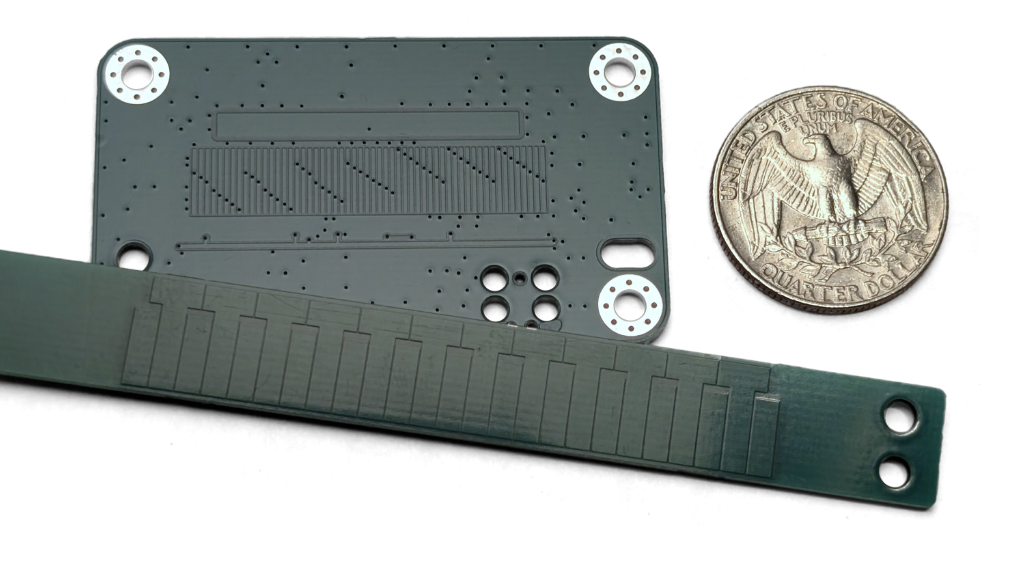
The trick inside every cheap digital caliper, pulled out, explained and given away. It is a nice example of the old spirit: one person works out how something clever works, builds their own and publishes the boards for anyone to copy. Rev B is in progress.
Nick's encoder has an STM32 drive a grid of transmit antennas on one PCB, coupling through a reflector PCB to measure displacement to roughly 40 micrometres. The design files and schematics are on GitHub, and Hackaday featured the project on 22 October.
from the glow-your-own dept.

Most people buy their gas-discharge displays; this maker is coating the glass himself with a home sputtering rig. The first prototype glowed only inside the vacuum chamber and died once sealed, which is exactly the sort of honest failure that makes these projects worth following.
Witchcraft and Alchemy deposited titanium and then platinum cathodes on glass, added an ITO anode and an argon fill, and drove it with a classic 74141 nixie driver. The next version swaps epoxy for a gasket and argon for a Penning gas mixture, with the goal of a full seven-segment display. Hackaday's write-up summarises the maker's video.
from the three-part-harmony-in-real-time dept.
Fresh off a Grammy for Wild and Clear and Blue, the trio put out a record of what they sound like in a room, which is where three-part harmony either holds or doesn't. Aoife O'Donovan walks through the songs and her recent guest turns. A little older than our usual news, included here simply because it's lovely.
Goldmine reviews Sing Me Alive, a live album drawn from I'm With Her's 2025 concerts, with Aoife O'Donovan talking about tracks including Find My Way to You, Overland and Mother Eagle, and about guesting on records by Sierra Hull and by Alison Brown and Steve Martin.
from the fiddle-meets-cello-meets-quarter-century dept.

Scottish fiddle and cello shouldn't make this much rhythm between them, but Fraser and Haas have been proving otherwise for a quarter of a century. The review singles out Haas's writing, which is worth noticing if you know her mainly as the engine under Fraser's tunes. An August review, here as a bit of decoration.
Strings Magazine reviews Meridians, the duo's seventh album and first since 2021, covering new tunes by both players, from a stirring opener by Haas to a quiet closing piece by Fraser, with medleys and dance sets in between.
from the asilomar-by-the-sea dept.

HPTS is the small, invitation-only workshop where the transaction-processing and storage crowd says what it really thinks, and Murat's trip reports are the next best thing to being there. The disk numbers from Dropbox are the bit to stop on: capacity has outrun bandwidth so far that reading a whole drive now takes about a day and a half.
A day-one write-up from the High Performance Transaction Systems workshop at Asilomar. It covers Ion Stoica on where agent-written software falls short, Todd Lipcon on learned systems, Dropbox on its Magic Pocket storage and the growing gap between drive size and throughput, and Google on Spanner Omni, among other talks.
from the measure-twice-commit-once dept.

An argument any kernel maintainer will recognise: the code that everything else depends on deserves the most patience, not the least. Zhang borrows from the slow food movement and ties effort to blast radius, which is a tidy way to say what reviewers have long felt. It is from July, but it has aged into exactly this moment.
Writing on the SIGOPS blog, Irene Zhang argues that fast AI-assisted development has cut the link between how quickly software is built and how much depends on it. She proposes deliberately slowing work on critical infrastructure in proportion to its dependents, while leaving quick tools for prototypes and low-risk code, and uses storage consistency as an example of what can quietly break.
from the feelings-are-not-a-leading-indicator dept.
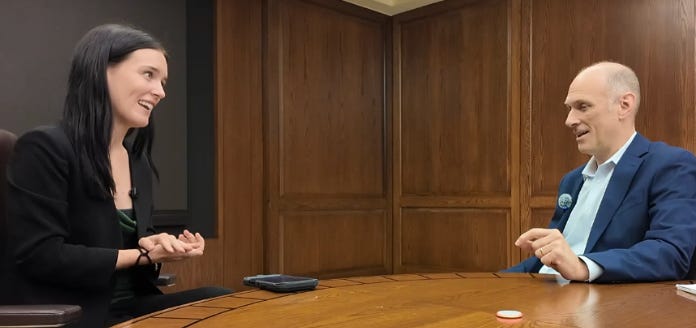
A central banker explaining, in plain terms, why the numbers and the national mood have stopped agreeing. Scanlon asks the questions you would want asked and lets him think out loud. The low-hire, low-fire labour market is the phrase to remember.
The Chicago Fed president talks about why consumer sentiment has become a weaker guide to spending, what drives people's gloom about prices, the slow-moving jobs market, and whether the AI data-centre boom is a demand shock the Fed needs to watch. The full transcript is free to read.
from the as-the-crow-thinks dept.
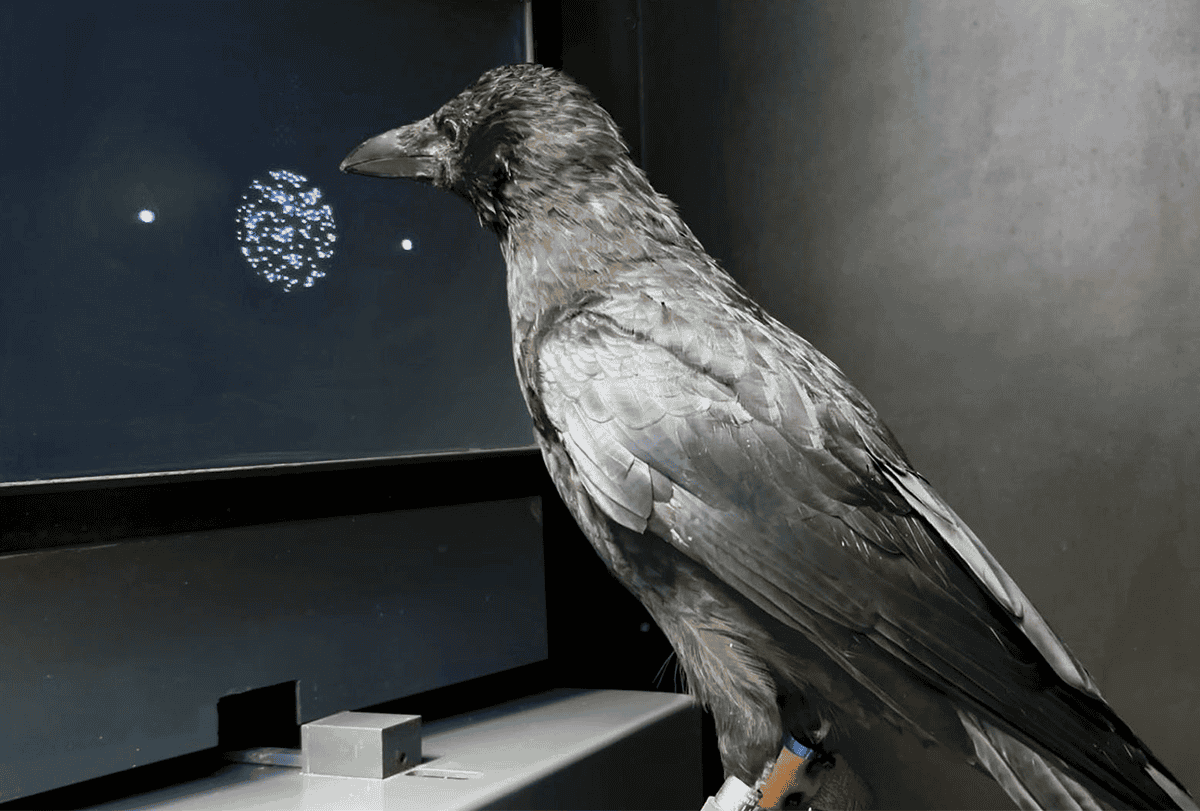
Corvids keep embarrassing the primates. Two carrion crows named Iggy and Lemmy, which is reason enough to read it, beat monkeys handily on a classic perception task, and their neurons gave the game away within 70 milliseconds. The open question of why bird brains run so fast is the fun part.
A study in Science from Andreas Nieder's lab in Tübingen trained carrion crows on a moving-dots decision task and recorded from a brain region that plays a role like the primate prefrontal cortex. The crows answered in about a quarter of a second, roughly twice as quickly as primates, and researchers suggest densely packed neurons, shorter wiring and warmer bodies as possible reasons.
from the look-ma-no-hands dept.

A Jordaan side street, a room full of self-playing pianos and a library of punched paper rolls: music stored as holes, which is practically a storage format. Volunteers run it, and the tours are by people who love the machines. Bonus history about who once ran a roll factory in the neighbourhood.
A small museum on Westerstraat in Amsterdam's Jordaan holding around fifty player pianos and close to twenty thousand music rolls, from the era when the pianola was a parlour sensation. Atlas Obscura's entry covers the collection, how player pianos work, and the local connection to the building now known as the Anne Frank House.
from the roll-for-initiative-then-snap dept.

Somebody built a whole alternate-history wargame universe on top of LEGO, gave it away, and grew a community that writes fiction and draws art for it. The designer's point that bricks are the perfect prototyping medium will ring true to anyone who has ever hacked something together. The included squadron instructions are a nice touch.
BrickNerd interviews Paul Antoine about Brassbound, a set of free tabletop games played with LEGO models, from Cold War-style ground battles to 1917 air combat at 1:300 scale. He talks about design, the game's Discord community and his favourite unit, and the article includes building instructions for an aircraft squadron.
from the it's-not-the-heat-it's-the-fractures dept.
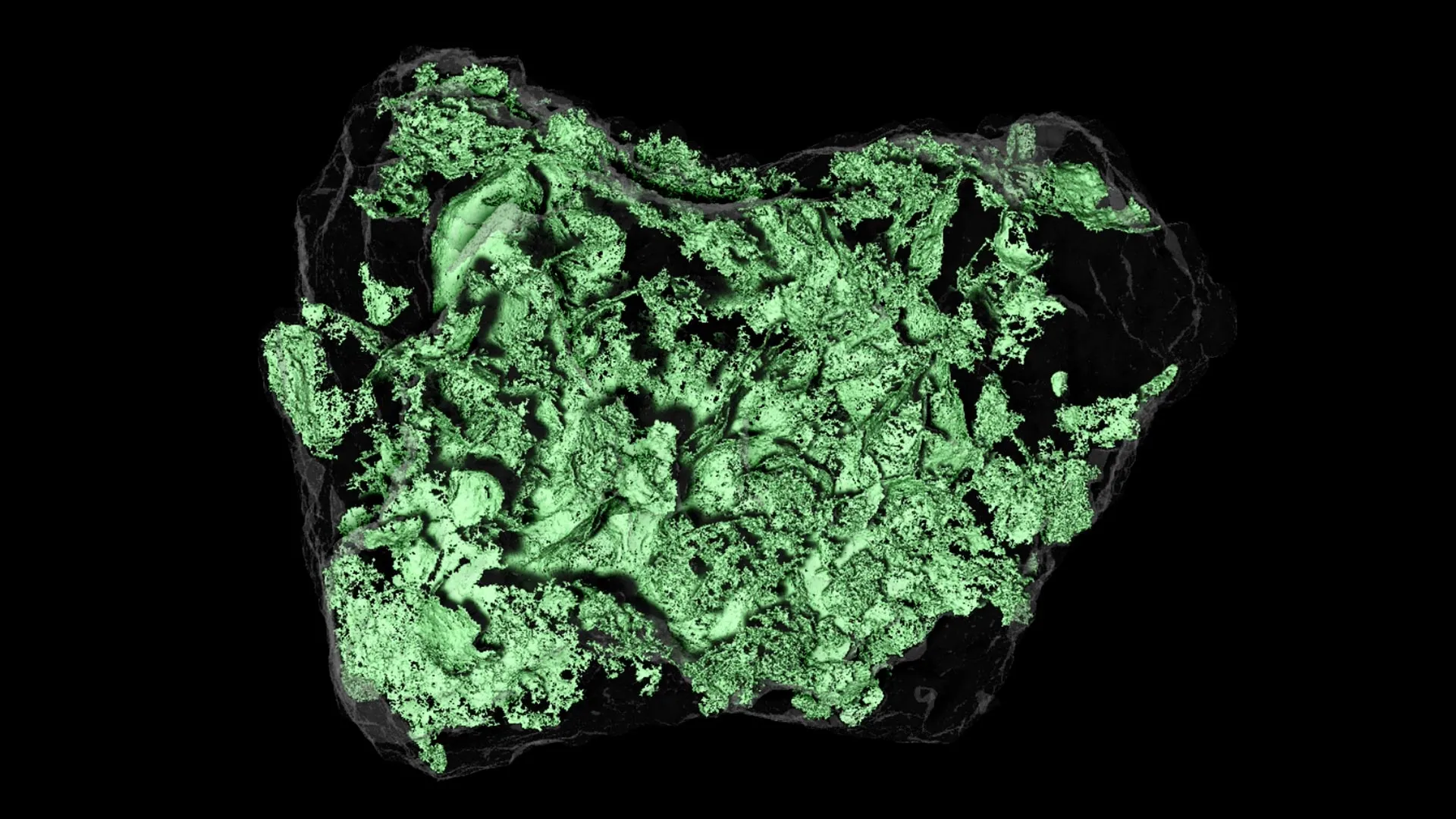
OSIRIS-REx brought back pieces of Bennu, and now the lab has explained a long-standing puzzle from orbit. It is a good example of sample return earning its keep: you can measure a rock from a spacecraft, but you need it on a bench to see why it behaves the way it does.
Researchers led from the University of Arizona, working with NASA Johnson and Nagoya University, scanned returned Bennu particles with X-ray CT and thermal imaging. Networks of internal cracks, along with porosity, explain why the asteroid's surface sheds heat so quickly, and simulations built from the scans match what the spacecraft measured. The study appeared in Nature Communications.
from the human-barcode-scanner dept.

Strictly useless and completely delightful: decoding QR codes by hand, error correction and all. It is the same pleasure as reading a hex dump, and you come away understanding what the little squares are actually doing. The human-readable QR variant at the end is a fun twist.
Hackaday covers Noel Friedrich's guide to decoding small QR codes on paper, including how to undo the masking and use the error-correction layout, plus a side project that uses that error correction to hide readable text inside a working code.
from the no-ITAR-in-the-slides dept.

The one conference where the people who write the code that keeps spacecraft alive compare notes, and the talks go up on YouTube afterwards for the rest of us. Registration just opened and the call for abstracts is live, so if a kernel person ever wanted an excuse to talk to the JPL crowd, this is it.
The 20th workshop on spacecraft flight software runs 22 to 25 March 2027 at Caltech's Ramo Auditorium, hosted by JPL with Aerospace Corporation, SwRI, NASA Goddard and APL. It is talks only, no papers; abstracts of up to 400 words are due 4 December 2026, and themes include architectures, resilience, space networking, DevOps and onboard AI.
from the five-a-day-in-the-cretaceous dept.
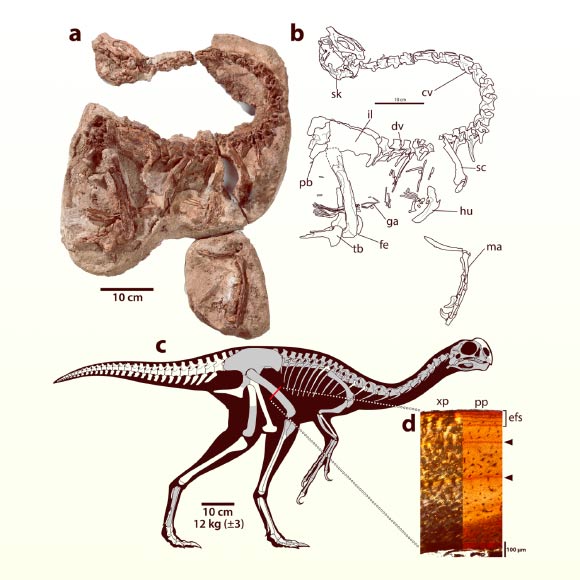
Hell Creek is T. rex country, so it is a nice change to meet a 12 kg neighbour with a weak bite and a sliding jaw that probably preferred fruit. The comparison to a living parrot is the bit that makes it click. Also a reminder that a nearly complete skull can sit in a collection for over a decade before its story gets told.
Researchers describe Infernogallus jamesi, a toothless oviraptorosaur from the very end of the Cretaceous in Montana and the Dakotas, from a near-complete skull collected in 2011. CT reconstructions of its jaw muscles point to a gentle, slicing bite, and with no gizzard stones found, the team argues for a soft, fruit-heavy diet. The paper is in Nature Communications.
from the grounded-before-takeoff dept.

We tend to tell bird evolution as a straight line towards the sky, and this one walks right off that script. Barely past Archaeopteryx on the family tree, it already had stubby arms and runner's legs, plus a raptor-style sickle claw for good measure. Bird science with a dinosaur chaser.
Yuezhuornis yangyuanensis, about 150 million years old from Fujian in southeastern China, sits among the earliest birds but has short forelimbs and limb proportions like modern ground birds, suggesting it could not fly. It also kept serrated teeth and a hyperextensible second toe. The study, by a team including the Institute of Vertebrate Paleontology in Beijing, appeared in Nature.
from the it's-all-connected-man dept.
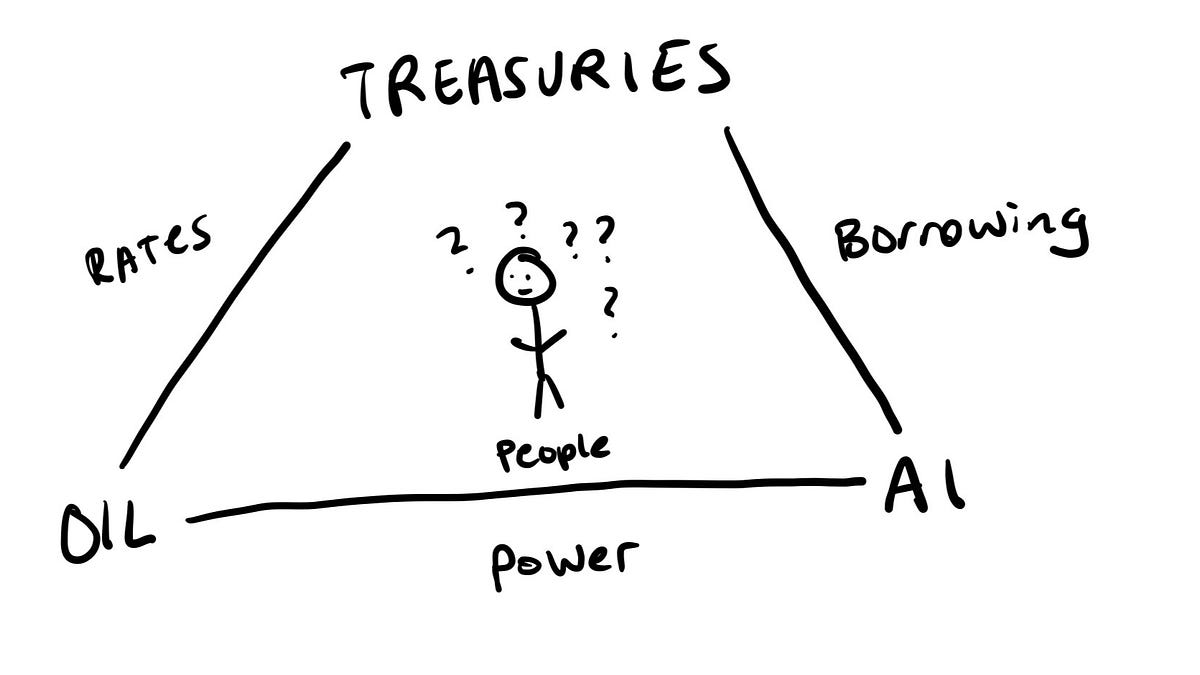
Plenty of people will tell you the economy feels weird; Scanlon actually draws the wiring diagram. The useful idea here is how three separate stories, energy prices, the data-centre building spree and government borrowing, push on each other. Calm, numerate and free to read.
Scanlon argues that higher oil prices, massive borrowing to fund AI infrastructure, and a large federal deficit are feeding into one another through interest rates and Treasury demand, and looks at who ends up carrying the cost. She backs it with recent figures on fuel prices, consumer sentiment, hyperscaler spending and the fiscal year's books.
from the murder-ballads-before-breakfast dept.
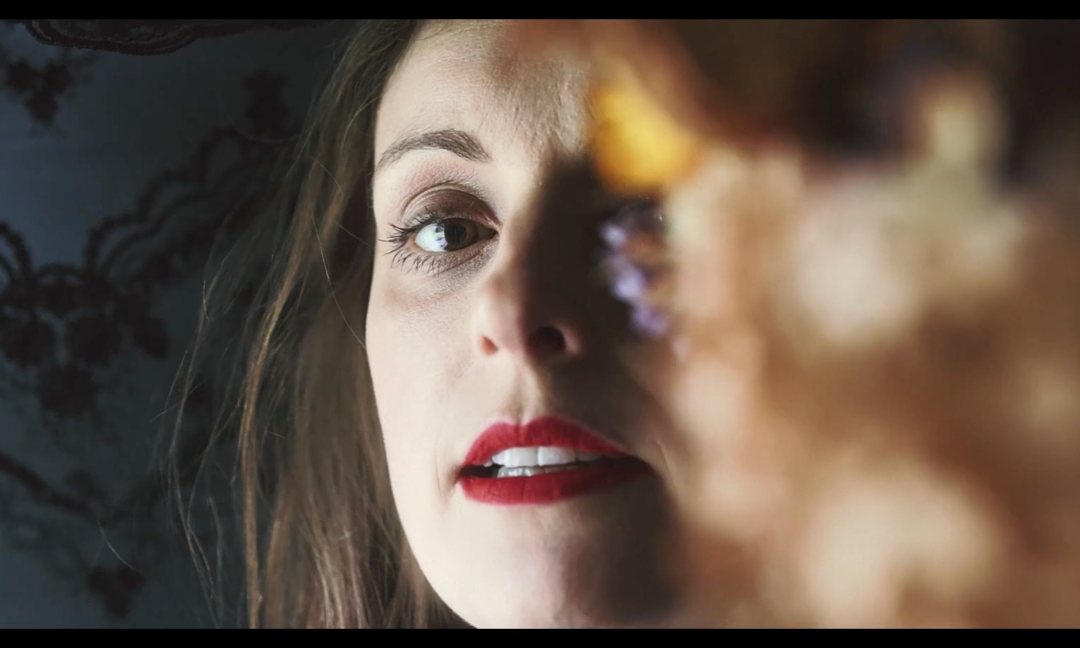
An Orkney fiddler, a grim Scottish ballad and a Boston-heavy band of players, which makes it a neat bridge between two of this feed's favourite places. Listen for how the strings carry the story while the voices stay plain. She animated the video herself, too.
Folk Alley premieres the video for Bichan's arrangement of the traditional ballad, with Kris Drever and Rachel Sermanni on vocals and a string section arranged with fiddler Katie McNally. It is the third single from her album Binnorie, due 30 October.
from the impressionist-tendencies dept.

A builder took LEGO's Monet set and reworked it into a moody night-time palette, then wrote up which part swaps worked and which colours turned out to be liars next to their neighbours. It is a good look at colour theory done in plastic, with a comment from the set's designer about how many bridge colours they tried.
Meredith Najewicz rebuilt the LEGO Art Bridge over a Pond of Water Lilies in dark blue, dark grey and black, inspired by a different Monet canvas. She explains her substitutions, from wedge plates to quarter-round tiles, how she sourced parts, and what she learned about tan versus white highlights.
from the it's-not-easy-being-green dept.

Textbooks insist there are no green stars, and for good physical reasons. This one cheats: it swallowed pieces of its old planetary system, and the sodium they left behind soaks up orange light. The survey also found pink and yellow white dwarfs nearby, so the night sky is a little more colourful than advertised.
University of Warwick astronomers report WD J1330+6435, a white dwarf whose atmosphere, polluted with rocky debris, gives it a chartreuse colour. A survey of 151 nearby white dwarfs found a handful of other odd hues, and the team estimates about one in thirty may look noticeably coloured.
from the export-symbol-or-bust dept.
Two decades of LTTng, and its maintainer still cannot upstream it piece by piece because the kernel will not export symbols with no in-tree user. Jake Edge's write-up is a fair, detailed look at a real engineering knot rather than a flame war. Anyone who has carried an out-of-tree module will nod along.
At the Linux Plumbers Conference, Mathieu Desnoyers led a session on how LTTng could work better alongside ftrace and perf. The discussion covered the rule against exporting unused symbols, duplicated tracing infrastructure, different ring-buffer needs, and whether a middle path exists between staying out of tree and merging everything at once.
from the oil-well-cuttings-never-lie dept.

A buried crater off the English coast that geologists voted against in 2009 turns out to be the real thing after all. The clinching evidence came from shocked quartz in old oil-well rock cuttings, which is a lovely example of industrial leftovers settling a scientific argument. Close enough to the Dutch coast to count as neighbourhood news, give or take 45 million years.
Researchers led by Uisdean Nicholson at Heriot-Watt University present several lines of evidence that the 3 km Silverpit Crater, 700 m below the seabed, was made by an asteroid around 160 m across some 43 to 46 million years ago. Simulations suggest the impact threw up a curtain of rock and water and a tsunami more than 100 m high.
from the jurassic-parking dept.

Two of this feed's favourite things in one small build: a speeder bike wearing a tyrannosaur as a body kit. It is compact enough to actually build this weekend, and the write-up explains the pipe-frame trick underneath. The final jaw detail left out of the instructions is the kind of nerdy footnote worth reading for.
Builder Dan Ko made this dinosaur-styled speeder for a community space-building challenge and shares an 18-step guide, a parts list you can load into BrickLink or Stud.io, and a separate display stand. It belongs to a running fan-made faction that started in a LEGO space Discord.
from the leftovers-again dept.
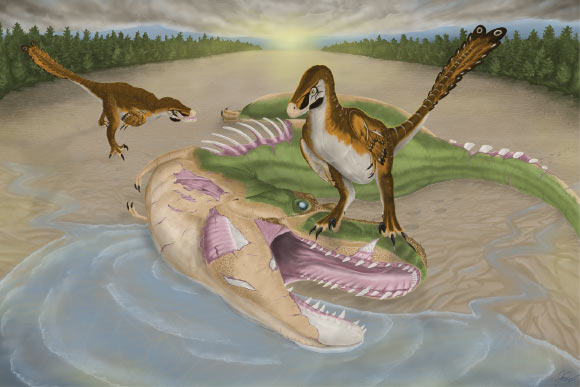
Forensic palaeontology at its finest: researchers measured serration spacing in bite marks, corrected for the angle of the bite, and named a likely suspect. The size gap makes the case, since a turkey-sized raptor was not taking down a half-tonne tyrannosaur, but it would happily clean up after one.
A jaw from a young Albertosaurus, about 70 million years old from Alberta, carries scrape marks matching the teeth of the dromaeosaur Atrociraptor. At an estimated 16 to 18 kilograms against roughly 530, the biter was probably feeding on a carcass rather than hunting. The study appeared in the Journal of Paleontology this month.
from the back-bone-of-the-algarve dept.
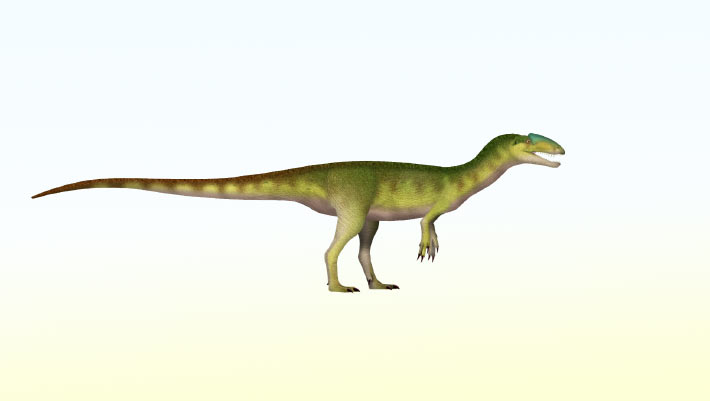
Not every dinosaur find is a skeleton; sometimes it is one 37 mm bone that moves a timeline by tens of millions of years. Worth noticing how much careful phylogenetic work can hang on a single centrum, and how honest the authors are about not naming it.
A vertebra from Late Triassic rocks near Loulé in southern Portugal, over 220 million years old, is the first Triassic dinosaur material from the Iberian Peninsula. Analysis places it among early neotheropods, closest to England's Sarcosaurus, but the bone is too incomplete to name a new species.
from the are-we-there-yet dept.

Opportunity's distance record stood as a monument to plucky persistence; Perseverance matched it in about a third of the time. The interesting part is why: the rover drove itself with autonomous navigation for over 90 percent of the trip. A nice milestone for onboard software as much as wheels.
On 11 October the rover's odometer reached about 45.2 km, edging past Opportunity's long-held total. It has also overtaken the Apollo 17 lunar rover and the Soviet Lunokhod 2, and it begins an extended mission running to roughly the end of 2028 with 29 samples collected so far.
from the carry-the-one dept.
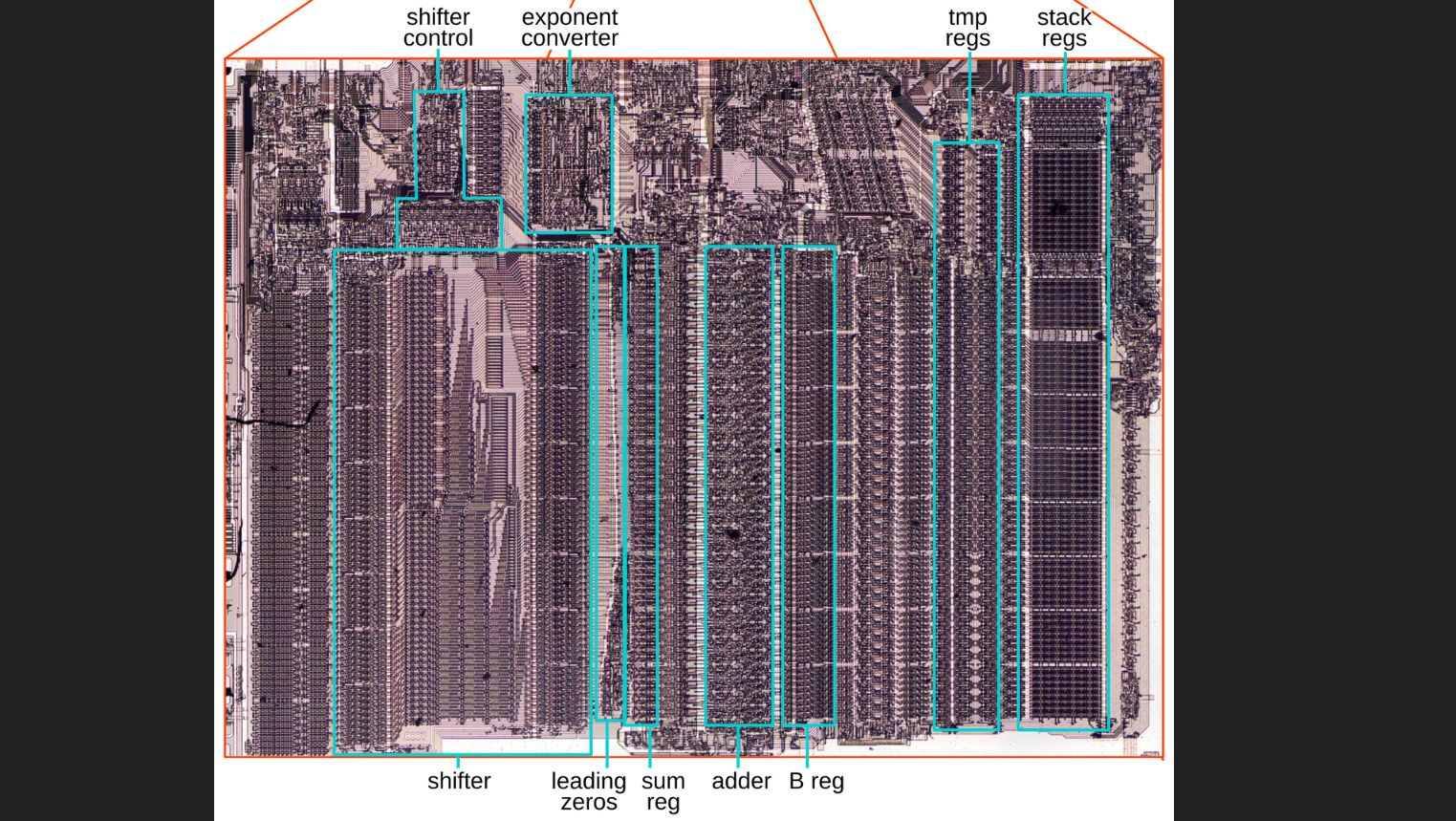
Ken Shirriff is back at the die photos, this time walking through the 8087's add and subtract microcode line by line. Systems people will enjoy the two-pass normalisation scheme and the candid description of the special-case handling as spaghetti. It is a reminder that IEEE floating point was hard-won silicon before it was a standard.
Using images of the chip and an extracted microcode ROM, the article traces how the 8087 handles 80-bit numbers through a wide integer adder, shifters and leading-zero detection, and how its microcode branches through the many edge cases floating-point arithmetic requires.
from the connecting-people-to-busybox dept.
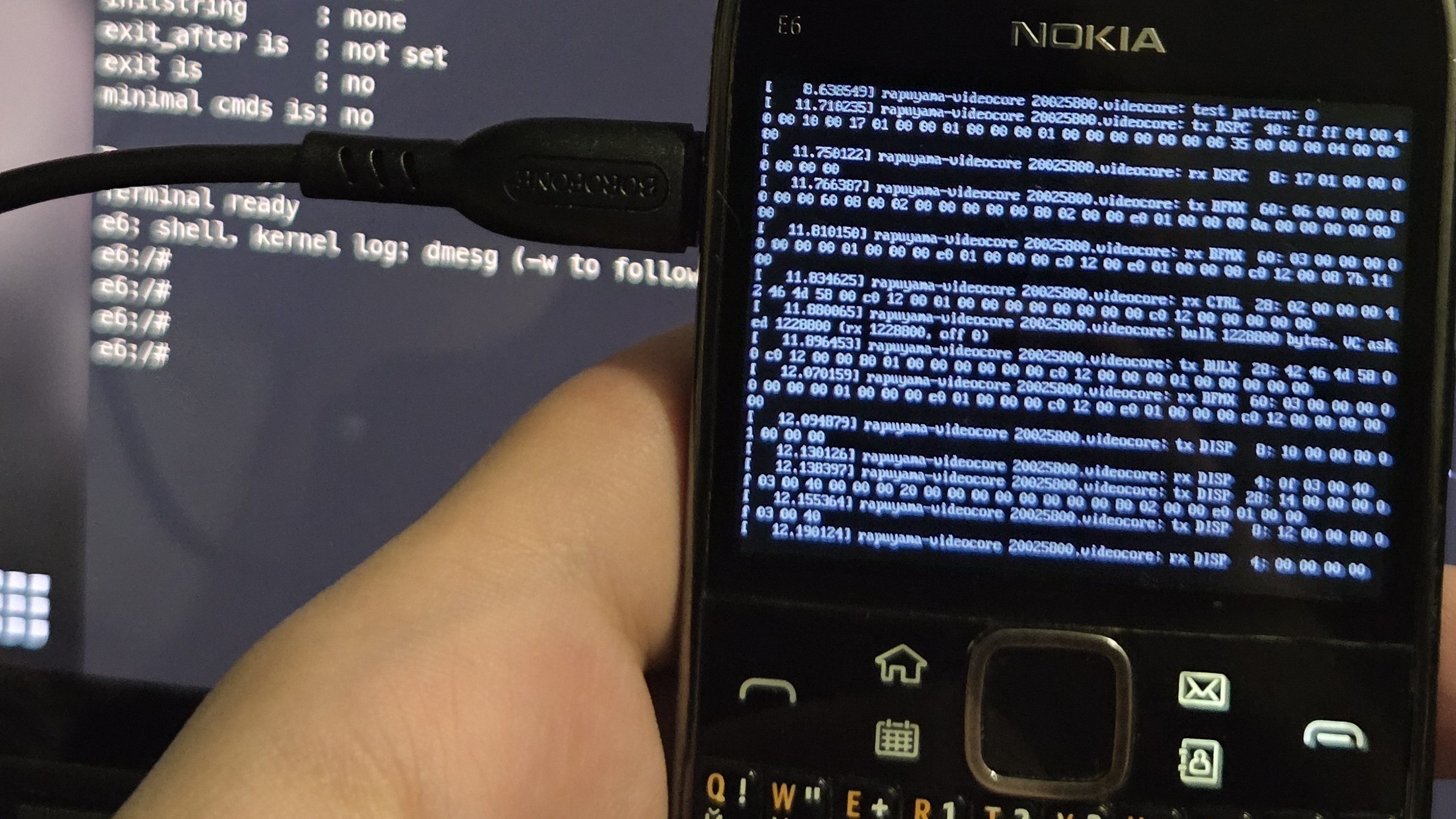
Pure late-90s energy: no unlocked bootloader, so a Symbian app loads a kernel, switches off the MMU and jumps. The display works by replaying messages sniffed from Nokia's own driver. The open puzzle, a mystery reset a few minutes after boot that may be the baseband watching over things, is the kind of bug kernel people lose weekends to.
A hobby project bringing a modern Linux 6.12 kernel up on the Nokia E6, an ARM11 phone from 2011. It boots to a BusyBox shell with the screen, keyboard and touchscreen working, and the repo includes build steps and detailed notes on the reset problem still being chased.
from the found-in-the-forest-not-the-feed dept.

A properly hopeful bird story from the neighbourhood: every rediscovery here is from the Philippines, Indonesian Papua or Papua New Guinea. Each came from patient local birders and guides with a camera rather than a big expedition, which a solo birder may find encouraging.
The latest update to the Lost Birds List records five species photographed again in 2025 after gaps of a decade or more, among them the Bismarck kingfisher, the Sulu cuckooshrike and the rufous-breasted blue flycatcher. The list of lost birds has shrunk from 163 in 2022 to 120.
from the wrong-kind-of-sun-on-the-line dept.

A cosy detective story: one of the earliest recorded cases of space weather affecting technology turned out to be dated before the railway in question existed. Physicists checked timetables and magnetometer records like historians, and the case closes neatly.
A 16-minute train delay near Exeter, blamed on telegraph disruption from a geomagnetic storm, was long dated to 1841. Researchers led by Lancaster's Jim Wild found the line did not open until 1846 and place the event in October 1848 instead, with an 1847 Midland Railway report as the earliest credible case.
from the good-boy-of-the-wari dept.
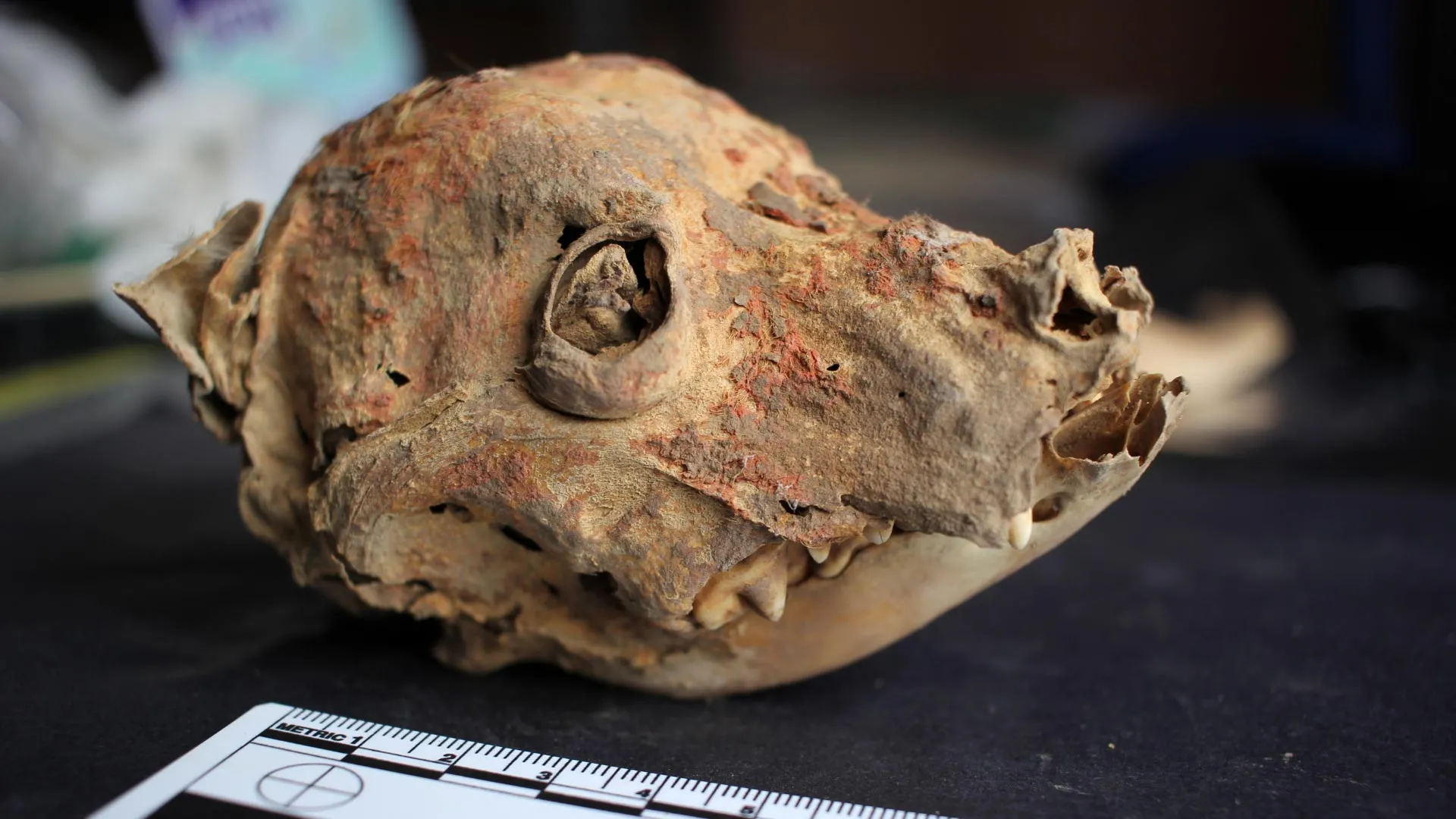
Archaeology with a wagging tail. The clever detail is that hairless dogs lack certain teeth because of the same gene, so even bare bones can reveal the breed. The diet results suggest these pups were fed more like children than like the other dogs.
Excavations at Castillo de Huarmey, a Wari-era site north of Lima, turned up remains of at least 19 dogs and a naturally mummified one, identified as Peruvian hairless dogs. Some puppies were buried with high-status people, and chemical analysis of their bones hints at deliberate breeding and special care.
from the filed-under-misc dept.

Proof that the best fieldwork sometimes happens in a storeroom. A scrap of skull the museum bought in 1924 turns out to be the first megaraptoran ever found in Europe, which redraws the map for a whole family of big-clawed hunters. Bonus points for a name that translates as unconquered female warrior.
Researchers from UCL and the Natural History Museum have named Invictibellatrix amberina from a partial skull collected on the Isle of Wight by amateur collector Reginald Hooley. The animal lived about 120 million years ago and was roughly 3 to 4 metres long. The find suggests megaraptorans ranged widely early on, then faded out in the northern continents while their southern cousins became top predators.
from the who-you-gonna-call dept.

Amateur astronomers pointed a telescope at a well-photographed patch of sky for about a hundred hours and found things nobody had catalogued. Fitting timing for late October. Look for the faint blue wisps; those are the new arrivals.
The 21 October Astronomy Picture of the Day shows the nebulae IC 59 and IC 63 near the bright star Gamma Cassiopeiae, plus three newly spotted faint clouds glowing in ionised oxygen. One may be gas piled up in a bow shock as the star ploughs through space, and another could be a planetary nebula if a white dwarf is found at its centre.
from the rm-rf-the-closet-carefully dept.

Every kernel hacker's archaeology dream: someone cleans out a room and finds a nine-track reel labelled with what may be the only surviving copy of Fourth Edition UNIX, the first one mostly rewritten in C. The story is worth it for the reminder of how much of our history lives on fragile media in forgotten cupboards.
A research associate in the University of Utah's Flux Research Group found the 1970s tape while clearing out a storage room in 2025. The team arranged to take it to the Computer History Museum for careful reading, noting that the hardware is scarce and old reels were often reused, so success was not guaranteed.
from the casque-and-effect dept.

A local bird with a solid-ivory battering ram on its face and a call that speeds up into maniacal laughter audible kilometres away. The section on males jousting in mid-air is the highlight. Also worth noticing the Malay folk name, which hints at what people thought that laugh sounded like.
The helmeted hornbill lives in lowland forests from southern Myanmar and Thailand through the Malay Peninsula, Sumatra and Borneo. Unlike other hornbills its casque is nearly solid, and males use it to ram rivals in flight. Demand for that casque has driven heavy poaching, and the species has been listed as Critically Endangered since 2015.
from the here-and-there-and-everywhere dept.
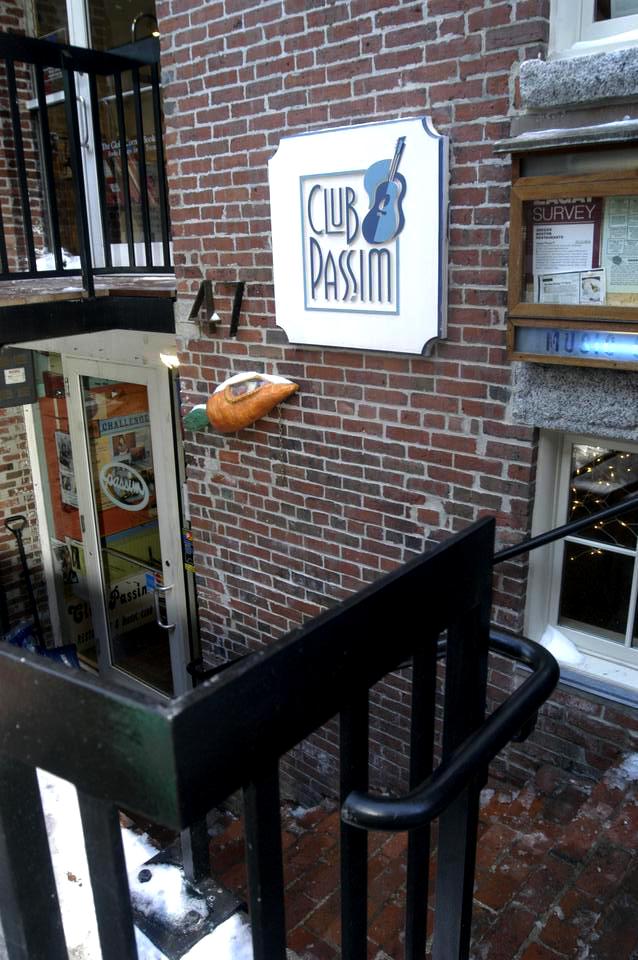
A short, affectionate history of the Cambridge room where the folk revival got a lot of its early practice. Dylan sneaking in between sets and old blues masters being brought north are the famous bits; the more charming one is how a gift shop slowly turned back into a stage.
The Crimson traces Club 47 from its 1958 opening on Mt. Auburn Street, through its move to Palmer Street and its 1968 closure, to its rebirth under new owners as Passim, named for the Latin word for here and there. It ends with the club as a nonprofit still running open mics and concerts.
from the analog-before-it-was-cool dept.

Before anyone had a stored program, people were summing sine waves with pulleys and a wire to print a year of tides in under half an hour. It is a lovely piece of special-purpose hardware, and the American one, nicknamed Old Brass Brains, stayed in service into the 1960s.
Starting with William Thomson's 1872 design, these mechanical analog computers added up many tidal components, each set by gears turning at its own rate, to draw future tide curves for a port. Dozens were built worldwide, and they were used for jobs as serious as planning the D-Day landings.
 Neat