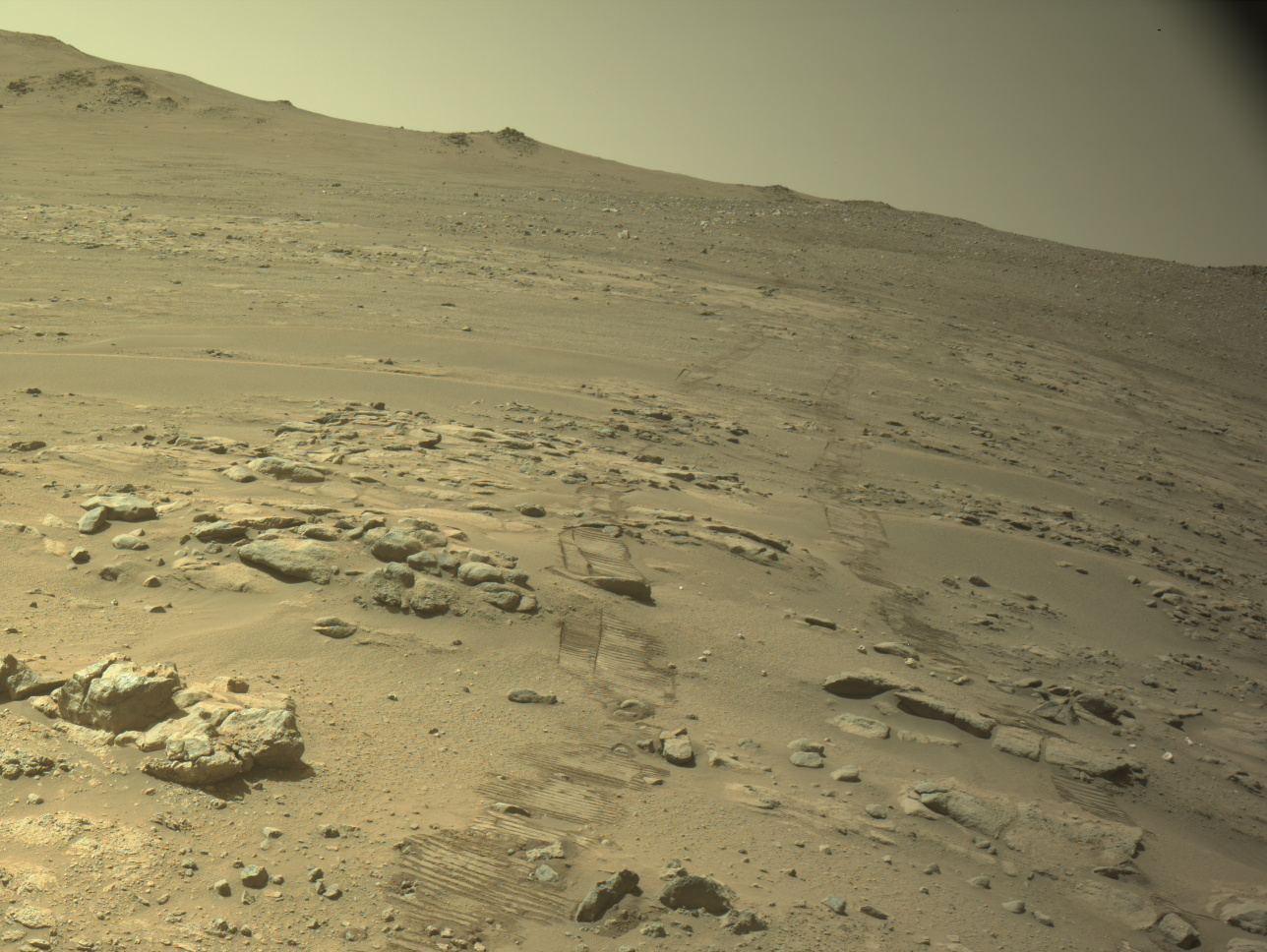
News for Nur. Stuff that's neat.
Section: Space and science news
Saturday, October 24, 2026

Pole flips and mass extinctions: the correlation that keeps coming back

Posted by Captain Queso on Saturday October 24, 2026 @5:57PM in Space and science news
from the which-way-is-north-again dept.
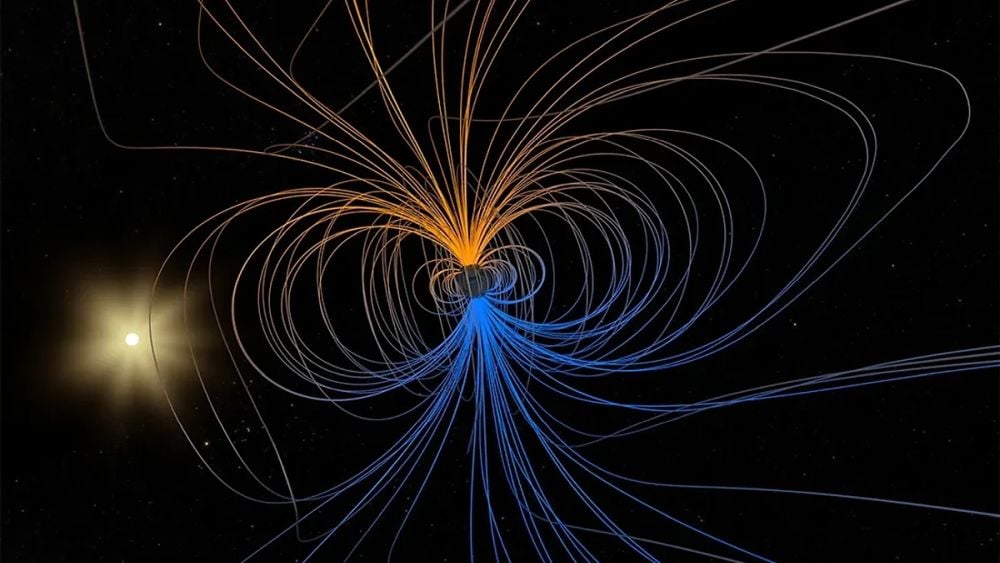
Geomagnetic reversals have been suspected of extinction crimes for decades without ever quite being convicted. This new work finds a tight cluster of flips lining up with an extinction and a flood-basalt eruption, which is still circumstantial, but it's a much nicer alibi problem for the defence.

Researchers have found an interval with an unusually dense run of geomagnetic reversals that coincides with a mass extinction and with Large Igneous Province eruptions. The authors stop short of claiming causation, but it strengthens a long-debated link between field flips and life on Earth having a bad time.

Valles Marineris is still tectonically active

Posted by Captain Queso on Saturday October 24, 2026 @12:57PM in Space and science news
from the grand-canyon-on-steroids dept.

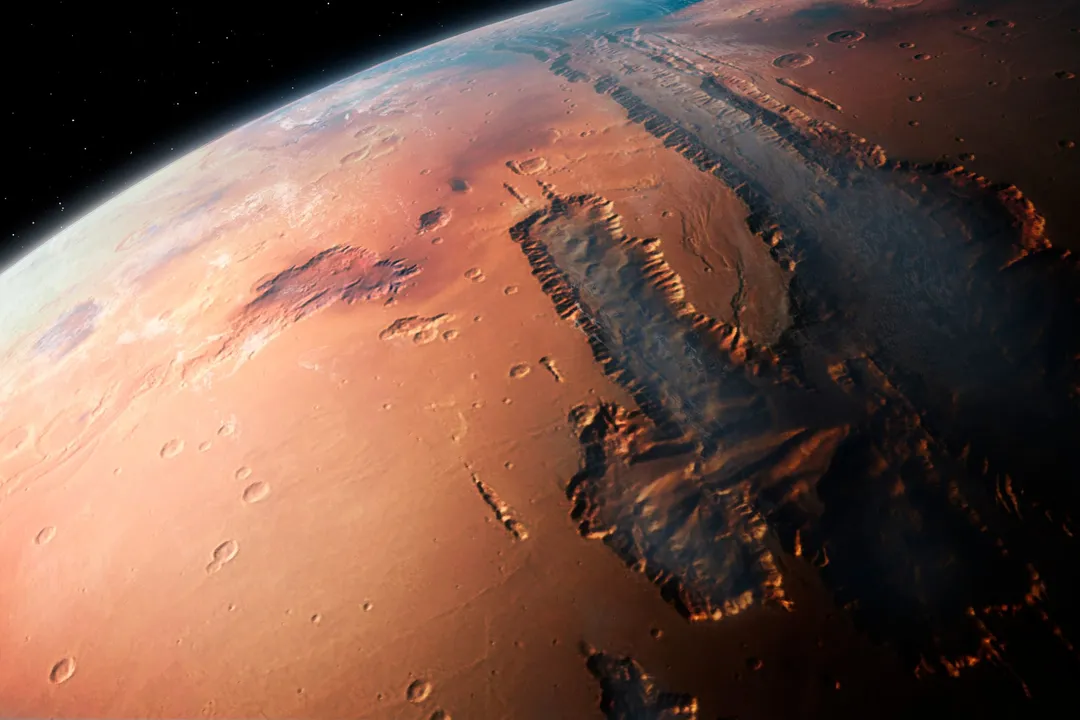
Mars is usually filed under geologically retired, so it is nice to see the planet's great canyon system still shifting. Worth noticing how far the evidence has to stretch: billions of years after it formed, the 4,000-kilometre scar is apparently not finished.

Scientists at Imperial College London and Columbia University report that Valles Marineris, the largest canyon in the solar system, is still tectonically active. Their work suggests faulting continues to reshape the canyon on present-day Mars.

JWST finds an exoplanet that is measurably lopsided

Posted by Captain Queso on Saturday October 24, 2026 @6:58AM in Space and science news
from the not-so-perfect-circle dept.

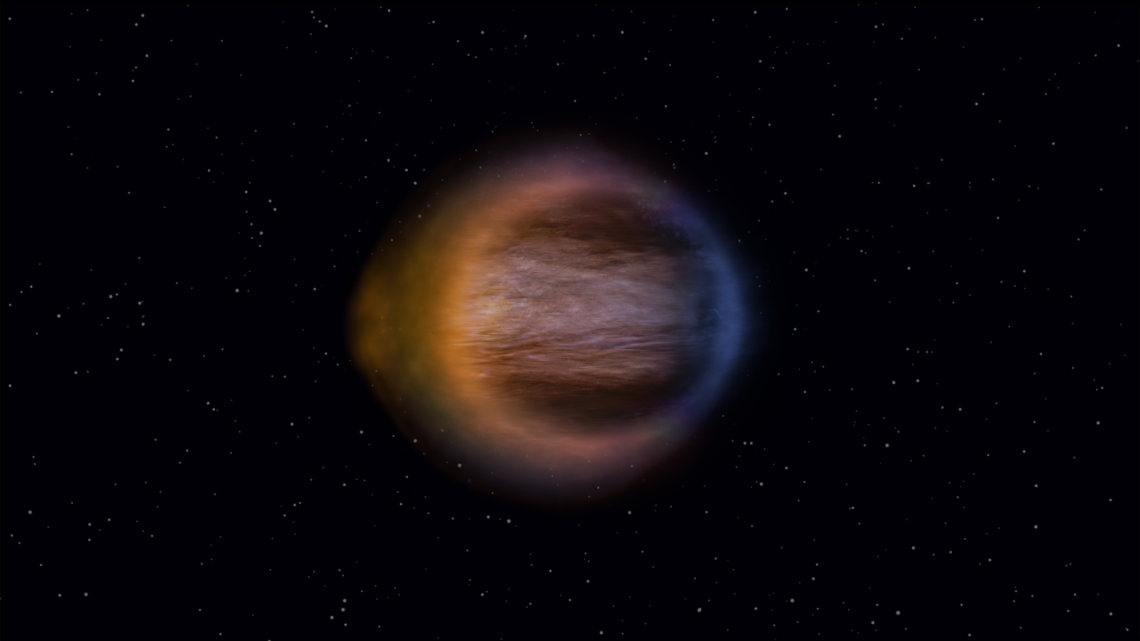
Textbook transit diagrams treat planets as tidy black discs, which is a fine approximation until a telescope is good enough to notice the edges disagree. Webb now is. The puffed-up evening side of this hot gas giant is the sort of detail that turns a dot into weather.

Researchers from Cornell and the University of Bristol used JWST transit data to show that the hot Jupiter WASP-17b has a noticeably asymmetric atmosphere, with its evening limb differing from its morning one. The Nature Astronomy paper is described as the first study of an exoplanet's lopsided shape, linked to fierce winds carrying heat around the planet.
Friday, October 23, 2026

Nearly 3,000 supernovae hint that dark energy is changing over time

Posted by Captain Queso on Friday October 23, 2026 @9:53PM in Space and science news
from the not-so-cosmological-constant dept.

Type Ia supernovae gave us dark energy in the first place, so it is fitting that a big pile of them is now poking at whether it holds still. This joins a growing set of results nudging against the cosmological constant. Not a revolution yet, but the error bars are getting interesting.

A new analysis of 2,884 exploding stars adds evidence that dark energy, the force behind the universe's accelerating expansion, may weaken or strengthen over cosmic time instead of staying constant. If it holds, a core assumption of the standard model of cosmology would need revisiting.

The Arsia Mons cloud: an 1,800 km Martian streak that breaks the models

Posted by Captain Queso on Friday October 23, 2026 @5:53PM in Space and science news
from the every-cloud-has-a-volcano-lining dept.

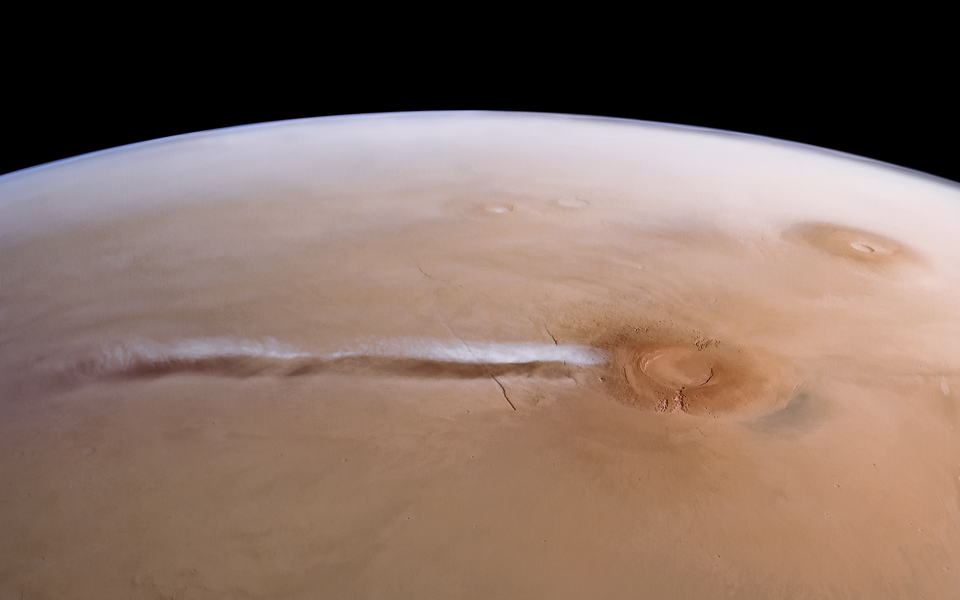
Every Martian summer morning a cloud the length of a small continent unfurls west of Arsia Mons, then vanishes by lunch, and for decades nobody could make the atmospheric models reproduce it. A new paper offers a mechanism that textbook cloud physics hasn't had a real example of before. Weather that keeps a schedule better than most airlines.

Scientists led from the Sorbonne report in Nature Geoscience a possible explanation for the Arsia Mons Elongated Cloud, a thin white plume up to 1,800 kilometres long that forms daily beside the extinct volcano during Martian summer. Mars Express has watched it for years, and the study suggests it may be the first natural example of a cloud process previously only theorised.

Why the Moon has two faces: farside samples point to lopsided heating

Posted by Captain Queso on Friday October 23, 2026 @2:44PM in Space and science news
from the dark-side-of-the-moon-was-just-shy dept.

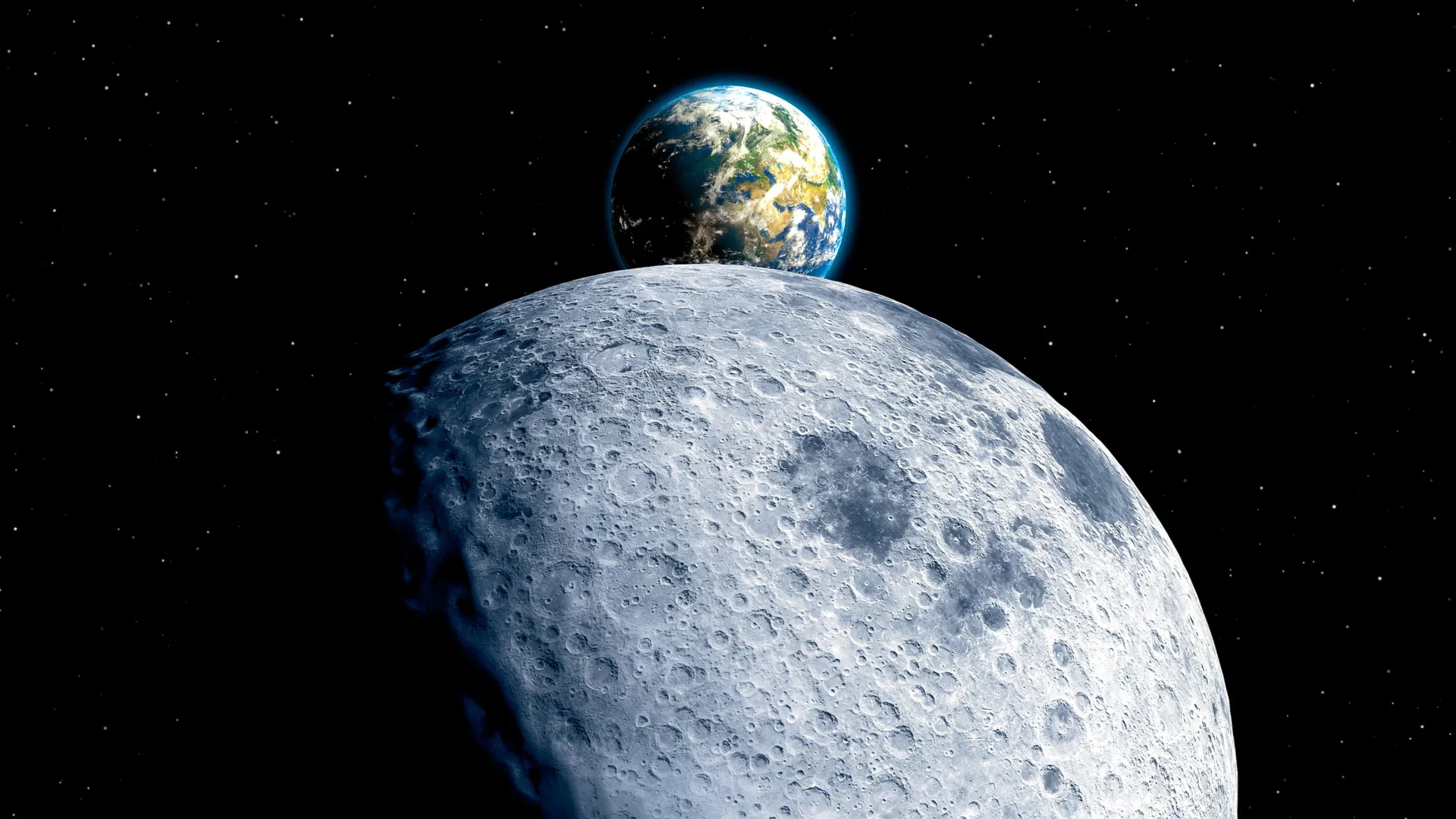
The near side is all dark lava seas, the far side is pale and cratered, and nobody has had a really satisfying reason why. Now there are actual rocks from the far side to argue with, which beats modelling in the dark. Notice that Earth itself is the culprit here: the tidal tug of the home planet may have stirred the young Moon's interior unevenly.

Using the first samples ever returned from the lunar farside, researchers propose an explanation for why the Moon's two hemispheres look so different. Their results suggest Earth's gravity heated the early Moon unevenly, driving huge flows of magma that shaped the contrasting landscapes.

Euclid finds its first new comet

Posted by Captain Queso on Friday October 23, 2026 @1:58PM in Space and science news
from the dark-energy-side-quest dept.

Euclid was built to map the dark universe across billions of light years, so it is quietly charming that it also tripped over a fresh snowball in our own backyard. Survey telescopes that stare at everything tend to find things nobody asked them to; this is that tradition, continued.

ESA's Euclid space telescope has spotted its first previously unknown comet, picked out in images it took between 16 and 24 September 2026 while carrying out its main cosmological survey.
Read the rest of this story (ESA Space Science)

The Cape Cod Bay fireball probably came from beyond Mars

Posted by Captain Queso on Friday October 23, 2026 @1:57PM in Space and science news
from the sonic-boom-over-the-Cape dept.

Remember the May boom that rattled windows and startled birds all along the Cape. MIT's Haystack people and colleagues pooled an unusually large pile of ground and satellite data to work out where the rock came from. Nice local detective story with a solar-system-sized map at the end.

Researchers including a team at MIT's Haystack Observatory traced the superbolide that exploded over Cape Cod Bay on 30 May. Their preprint describes a dense, strong, possibly iron-rich meteoroid whose earlier orbit reached out past Mars.

Curiosity catches a Martian dawn over 16 km wind-carved ridges

Posted by Captain Queso on Friday October 23, 2026 @9:17AM in Space and science news
from the morning-on-sol-4982 dept.

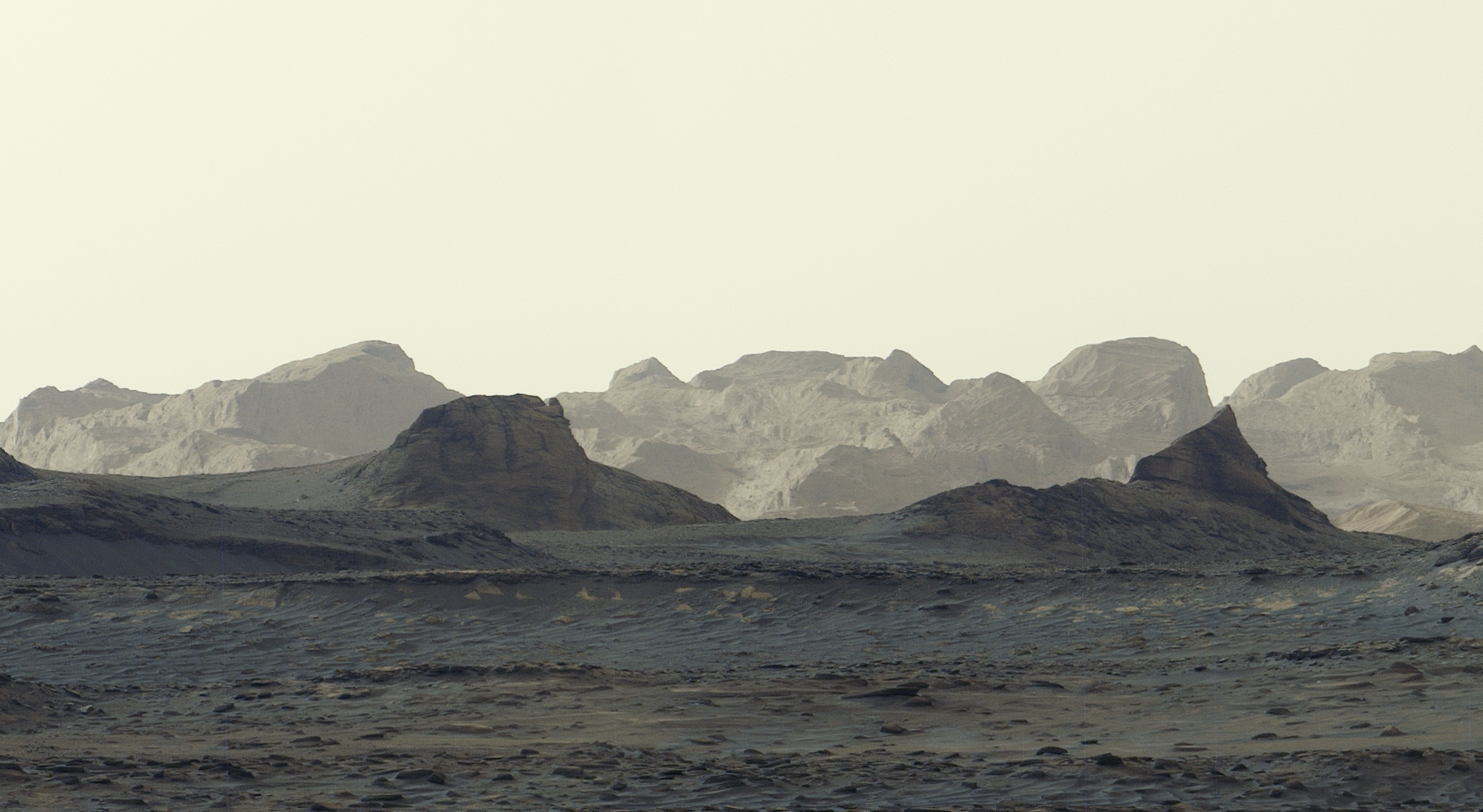
A pretty picture with a geology puzzle attached. The yardangs on Mount Sharp are the wrong colour and their layers tilt oddly, and one idea is that they are ancient volcanic ash. Curiosity plans to drive up and poke them with its arm in 2027, which counts as a cliffhanger by rover standards.

Curiosity's Mastcam shot six frames at 8:30 a.m. local time on sol 4,982 (August 11, 2026), stitched into a panorama without colour correction. It shows the wind-sculpted yardangs on the northwest side of Mount Sharp, ridges about 16 km long. The team hopes to reach their base in 2027 to work out what they are made of.

JAXA's MMX is on its way to bring back a piece of Phobos

Posted by Captain Queso on Friday October 23, 2026 @9:16AM in Space and science news
from the fear-and-dread-sample-return dept.

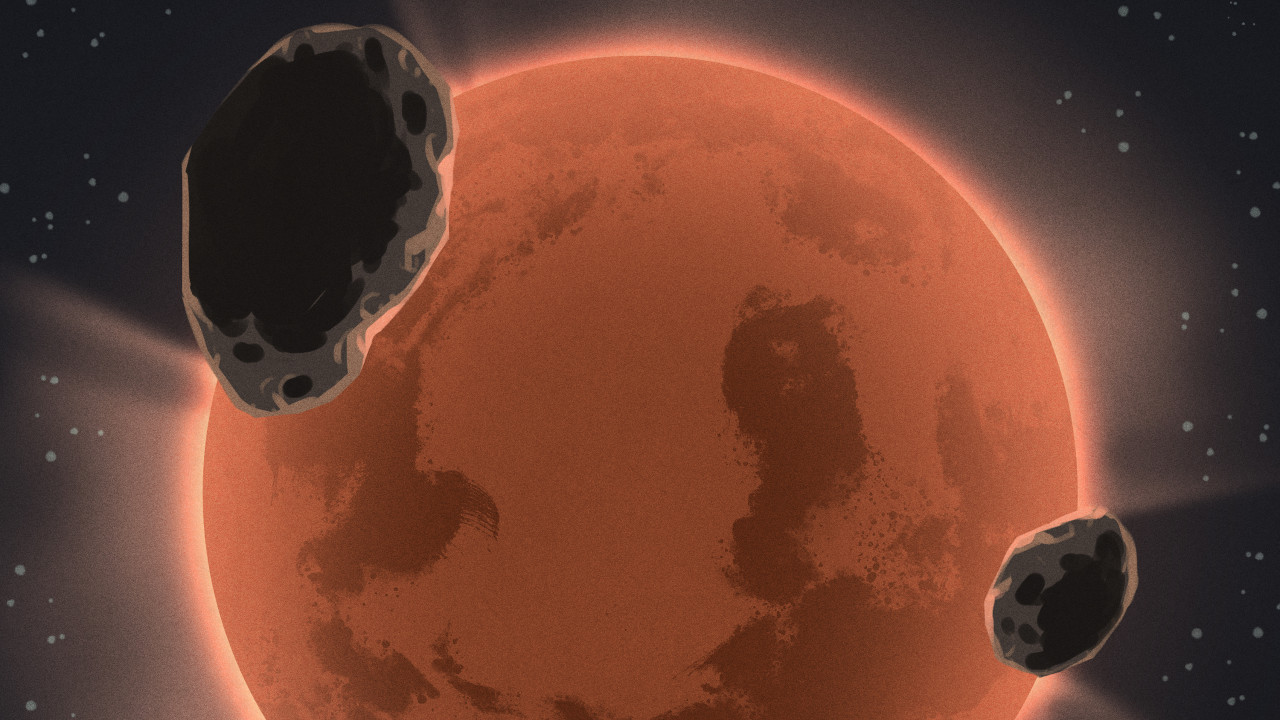
Japan's sample-return team, the people behind Hayabusa and Hayabusa2, is going after a moon of Mars this time. Phobos is too small to orbit in the normal sense, so landing looks more like a careful bump than a touchdown. The capsule is due back around 2031.

JAXA's Martian Moons eXploration spacecraft launched on an H3 rocket from Tanegashima this week. It will study Phobos, about 22 km across, land on it and collect a sample of at least 10 grams to return to Earth. Hackaday covers the mission and the oddities of operating around such a small body.

Why Bennu's boulders don't hold heat: they're full of cracks

Posted by Captain Queso on Friday October 23, 2026 @3:24AM in Space and science news
from the it's-not-the-heat-it's-the-fractures dept.

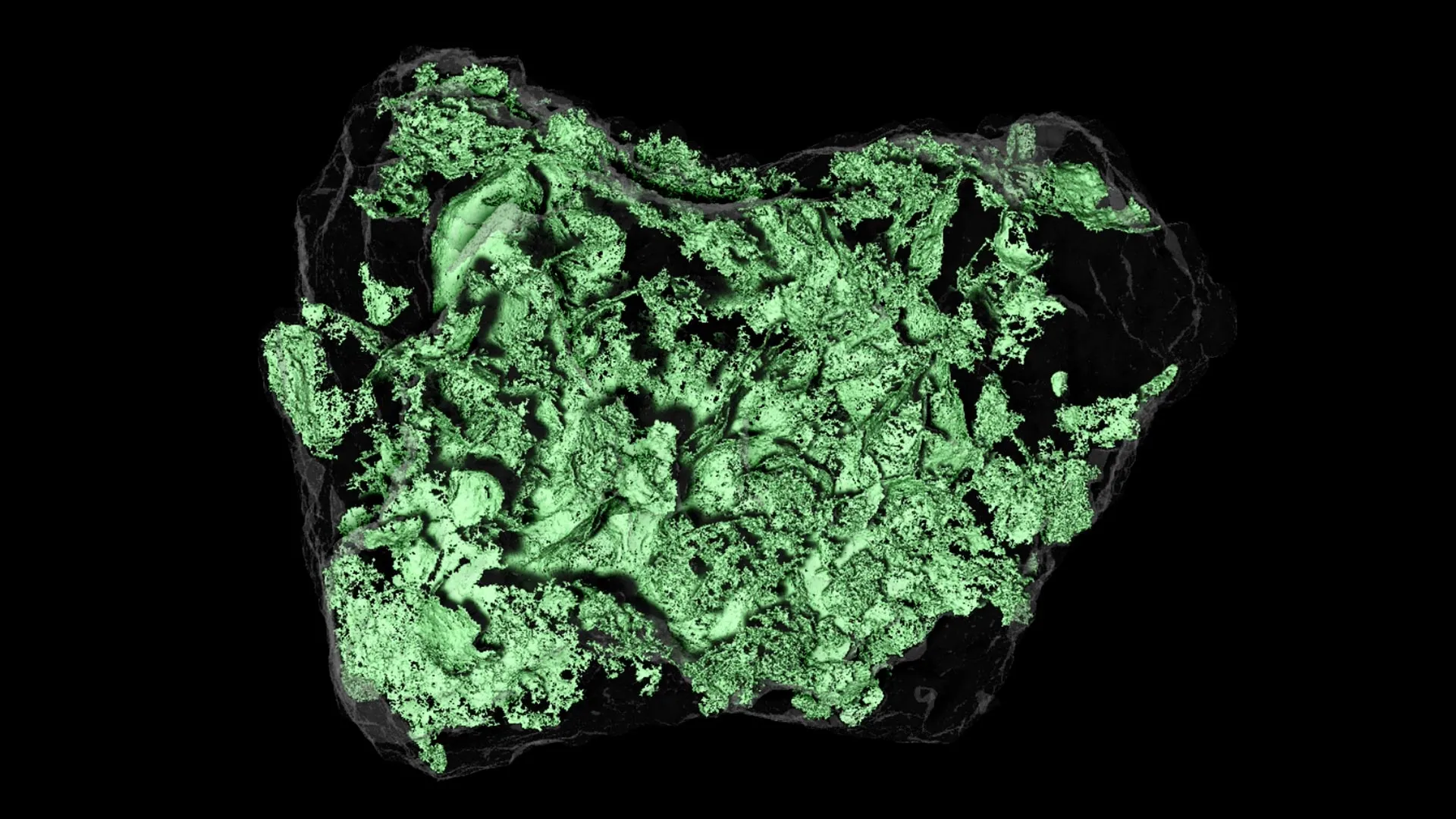
OSIRIS-REx brought back pieces of Bennu, and now the lab has explained a long-standing puzzle from orbit. It is a good example of sample return earning its keep: you can measure a rock from a spacecraft, but you need it on a bench to see why it behaves the way it does.

Researchers led from the University of Arizona, working with NASA Johnson and Nagoya University, scanned returned Bennu particles with X-ray CT and thermal imaging. Networks of internal cracks, along with porosity, explain why the asteroid's surface sheds heat so quickly, and simulations built from the scans match what the spacecraft measured. The study appeared in Nature Communications.
Read the rest of this story (ScienceDaily (University of Arizona))

Flight Software Workshop 2027: JPL hosts, abstracts due 4 December

Posted by Captain Queso on Friday October 23, 2026 @2:50AM in Space and science news
from the no-ITAR-in-the-slides dept.

The one conference where the people who write the code that keeps spacecraft alive compare notes, and the talks go up on YouTube afterwards for the rest of us. Registration just opened and the call for abstracts is live, so if a kernel person ever wanted an excuse to talk to the JPL crowd, this is it.

The 20th workshop on spacecraft flight software runs 22 to 25 March 2027 at Caltech's Ramo Auditorium, hosted by JPL with Aerospace Corporation, SwRI, NASA Goddard and APL. It is talks only, no papers; abstracts of up to 400 words are due 4 December 2026, and themes include architectures, resilience, space networking, DevOps and onboard AI.
Read the rest of this story (Flight Software Workshop)

The first properly green star is a white dwarf full of sodium

Posted by Captain Queso on Friday October 23, 2026 @2:44AM in Space and science news
from the it's-not-easy-being-green dept.

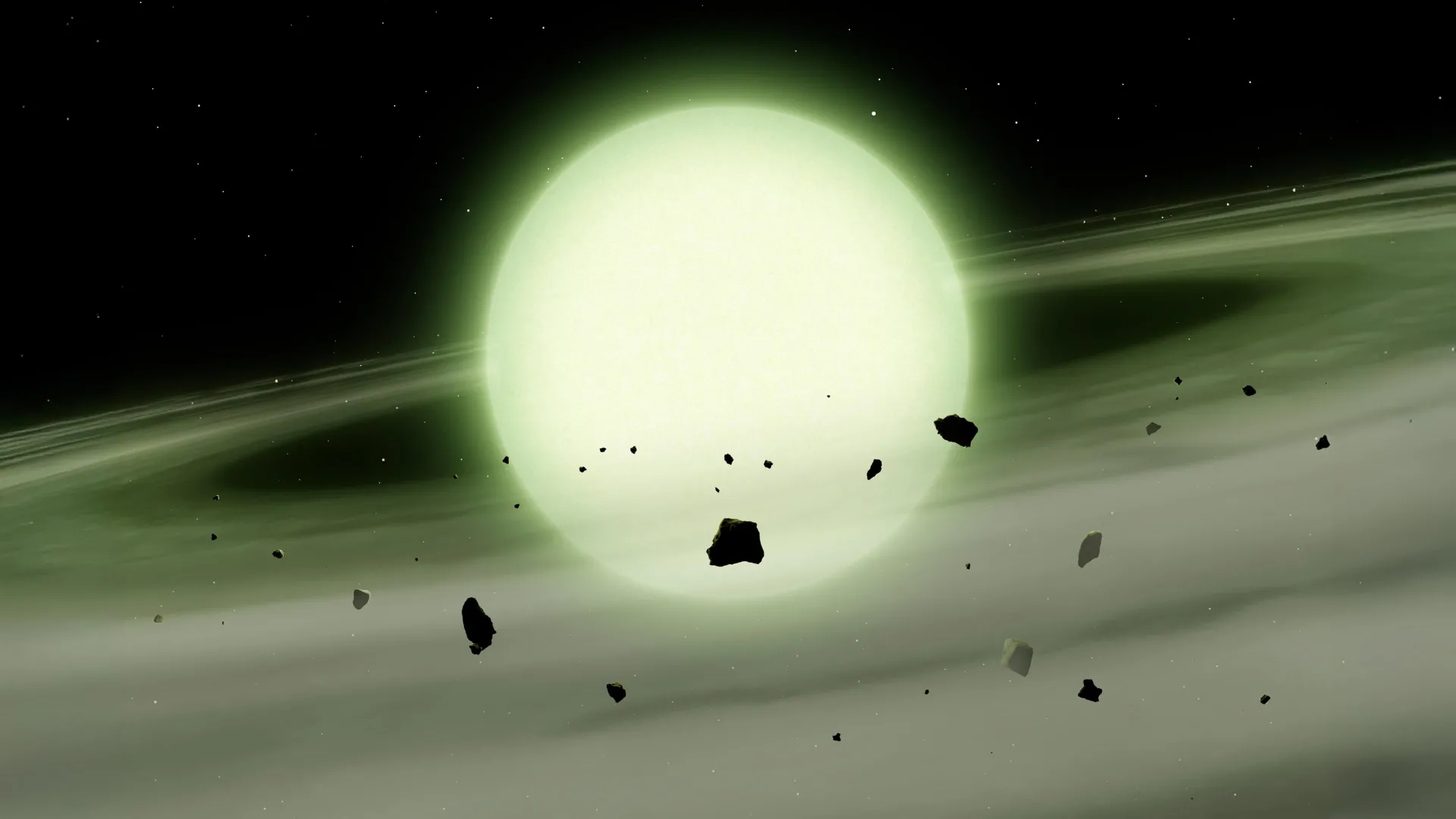
Textbooks insist there are no green stars, and for good physical reasons. This one cheats: it swallowed pieces of its old planetary system, and the sodium they left behind soaks up orange light. The survey also found pink and yellow white dwarfs nearby, so the night sky is a little more colourful than advertised.

University of Warwick astronomers report WD J1330+6435, a white dwarf whose atmosphere, polluted with rocky debris, gives it a chartreuse colour. A survey of 151 nearby white dwarfs found a handful of other odd hues, and the team estimates about one in thirty may look noticeably coloured.
Read the rest of this story (ScienceDaily (University of Warwick))

The North Sea's Silverpit Crater really was an asteroid impact

Posted by Captain Queso on Friday October 23, 2026 @2:42AM in Space and science news
from the oil-well-cuttings-never-lie dept.

A buried crater off the English coast that geologists voted against in 2009 turns out to be the real thing after all. The clinching evidence came from shocked quartz in old oil-well rock cuttings, which is a lovely example of industrial leftovers settling a scientific argument. Close enough to the Dutch coast to count as neighbourhood news, give or take 45 million years.

Researchers led by Uisdean Nicholson at Heriot-Watt University present several lines of evidence that the 3 km Silverpit Crater, 700 m below the seabed, was made by an asteroid around 160 m across some 43 to 46 million years ago. Simulations suggest the impact threw up a curtain of rock and water and a tsunami more than 100 m high.
Read the rest of this story (ScienceDaily (Heriot-Watt University))

Perseverance passes Opportunity to become the longest-driving off-world rover

Posted by Captain Queso on Friday October 23, 2026 @1:47AM in Space and science news
from the are-we-there-yet dept.

Opportunity's distance record stood as a monument to plucky persistence; Perseverance matched it in about a third of the time. The interesting part is why: the rover drove itself with autonomous navigation for over 90 percent of the trip. A nice milestone for onboard software as much as wheels.

On 11 October the rover's odometer reached about 45.2 km, edging past Opportunity's long-held total. It has also overtaken the Apollo 17 lunar rover and the Soviet Lunokhod 2, and it begins an extended mission running to roughly the end of 2028 with 29 samples collected so far.

A solar storm, a delayed train, and a date that was off by seven years

Posted by Captain Queso on Friday October 23, 2026 @1:43AM in Space and science news
from the wrong-kind-of-sun-on-the-line dept.

A cosy detective story: one of the earliest recorded cases of space weather affecting technology turned out to be dated before the railway in question existed. Physicists checked timetables and magnetometer records like historians, and the case closes neatly.

A 16-minute train delay near Exeter, blamed on telegraph disruption from a geomagnetic storm, was long dated to 1841. Researchers led by Lancaster's Jim Wild found the line did not open until 1846 and place the event in October 1848 instead, with an 1847 Midland Railway report as the earliest credible case.
Read the rest of this story (Lancaster University)

New ghosts turn up beside the Ghosts of Cassiopeia

Posted by Captain Queso on Friday October 23, 2026 @1:16AM in Space and science news
from the who-you-gonna-call dept.

Amateur astronomers pointed a telescope at a well-photographed patch of sky for about a hundred hours and found things nobody had catalogued. Fitting timing for late October. Look for the faint blue wisps; those are the new arrivals.

The 21 October Astronomy Picture of the Day shows the nebulae IC 59 and IC 63 near the bright star Gamma Cassiopeiae, plus three newly spotted faint clouds glowing in ionised oxygen. One may be gas piled up in a bow shock as the star ploughs through space, and another could be a planetary nebula if a white dwarf is found at its centre.