News for Nur. Stuff that's neat.
Section: Boston and New England
Saturday, October 24, 2026

Michele Felice Cornè, the painter who got New England eating tomatoes

Posted by Captain Queso on Saturday October 24, 2026 @5:54PM in Boston and New England
from the love-apple-of-Newport dept.

Every culinary revolution needs an early adopter willing to be stared at, and in Newport it was apparently an Italian marine painter. A good small story about how a whole region came round to something the rest of us now take for granted on pizza.

The New England Historical Society tells the story of Michele Felice Cornè, an Italian-born artist who settled in Newport, Rhode Island, and is credited with persuading suspicious New Englanders that tomatoes were safe to eat. His house still stands on the street named after him in the city's historic district.
Read the rest of this story (New England Historical Society)

The Somerville Theatre becomes its own landlord

Posted by Captain Queso on Saturday October 24, 2026 @12:53PM in Boston and New England
from the house-lights-stay-on dept.

After a summer of nervous headlines about the Davis Square building being put up for sale, the theatre's future looks settled. A century-old single-screen-and-stage palace that also hosts folk shows owning its own roof is about as cheering as Boston real estate news gets.

Universal Hub reports that the Somerville Theatre in Davis Square has secured its future by taking ownership of its building, so it is now its own landlord. The building had been put on the market earlier in 2026.

Samuel Morey, the New England inventor Robert Fulton outsailed

Posted by Captain Queso on Saturday October 24, 2026 @6:51AM in Boston and New England
from the full-steam-behind dept.

Every famous invention has an unfamous inventor somewhere upstream, and Morey has a better claim than most. Notice the range: steamboat, an early internal combustion engine and even a primitive car, all from a man most people have never heard of.

The New England Historical Society tells the story of Samuel Morey of northern New England, who built working steamboats before Robert Fulton's famous success and later patented an internal combustion engine. The article covers his dealings with Fulton and why credit went elsewhere.
Read the rest of this story (New England Historical Society)
Friday, October 23, 2026

Madame Knight rides the Boston Post Road alone, 1704

Posted by Captain Queso on Friday October 23, 2026 @9:50PM in Boston and New England
from the are-we-there-yet dept.

Long before turnpikes and rest stops, a Boston schoolmistress set off on horseback for New Haven and New York, and kept a sharp-tongued journal of the inns and guides along the way. Her account is one of the best windows we have on everyday colonial travel. Imagine the Yelp reviews.

In 1704 Sarah Kemble Knight, a 38-year-old Boston widow, teacher and businesswoman, made the long horseback trip from Boston to New Haven and on to New York on family business. The New England Historical Society retells the journey and the journal she kept, later published and still read for its picture of colonial roads and taverns.
Read the rest of this story (New England Historical Society)

The Berlin Dictionary: how a New Hampshire mill town grew its own language

Posted by Captain Queso on Friday October 23, 2026 @5:49PM in Boston and New England
from the parlez-vous-paper-mill dept.

Forget dropped r's and 'wicked'. In Berlin, up in the North Country, French Canadian mill families and their English-speaking neighbours cooked up a mixed vernacular odd enough that someone wrote a dictionary of it. A nice reminder that New England speech has more layers than the Boston accent.

The New England Historical Society looks at the local speech of Berlin, New Hampshire, shaped by the French Canadians who came to work in its paper mills. It covers the blend of French and English that took hold there and the dictionary compiled to record it.
Read the rest of this story (New England Historical Society)

The Jumping Frenchmen of Maine, a 19th-century medical mystery

Posted by Captain Queso on Friday October 23, 2026 @9:14AM in Boston and New England
from the startle-response dept.

New England folklore that turned into real neurology. Lumberjacks at Moosehead Lake who leapt and echoed words when startled became a newspaper sensation, and then a research project for George Beard, who tried reciting Homer at one of them. The trail ends, unexpectedly, at Gilles de la Tourette.

Ross Bullen traces the story from an 1878 New York Sun report and an earlier 1861 account through Beard's field tests in 1880. Beard compared the jumpers with dancing plagues and latah, the startle condition described in the Malay world. The essay follows how the case fed into Tourette's later work on tics.
Read the rest of this story (The Public Domain Review)

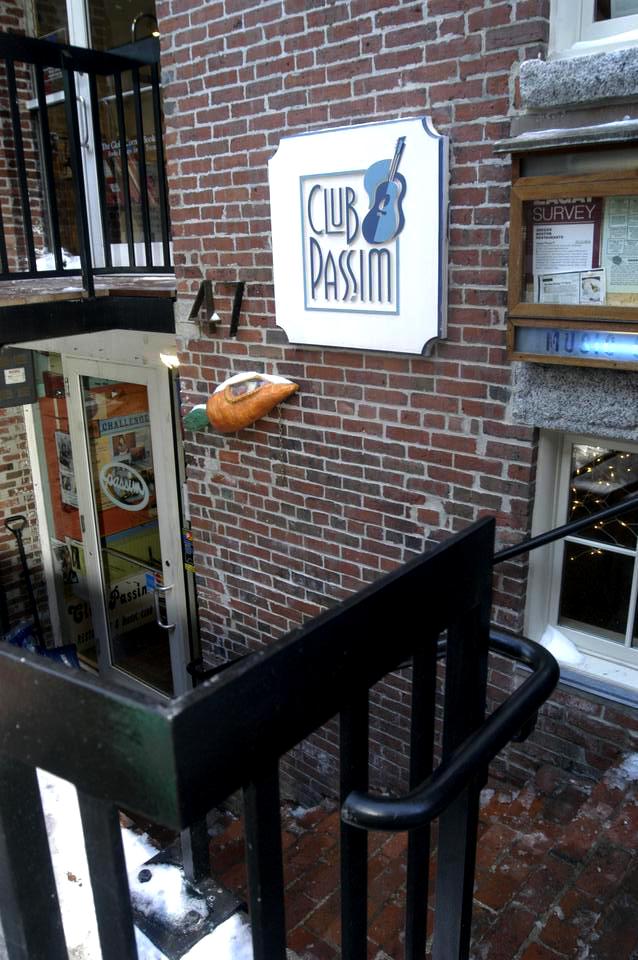
How a Mt. Auburn Street coffeehouse became Club Passim

Posted by Captain Queso on Friday October 23, 2026 @1:13AM in Boston and New England
from the here-and-there-and-everywhere dept.

A short, affectionate history of the Cambridge room where the folk revival got a lot of its early practice. Dylan sneaking in between sets and old blues masters being brought north are the famous bits; the more charming one is how a gift shop slowly turned back into a stage.

The Crimson traces Club 47 from its 1958 opening on Mt. Auburn Street, through its move to Palmer Street and its 1968 closure, to its rebirth under new owners as Passim, named for the Latin word for here and there. It ends with the club as a nonprofit still running open mics and concerts.
Read the rest of this story (The Harvard Crimson)