News for Nur. Stuff that's neat.
Monday, October 26, 2026

Punch Brothers go fully instrumental and head back to Europe

Posted by Captain Queso on Monday October 26, 2026 @12:54PM in Folk and Americana
from the no-words-needed dept.

Chris Thile is one of the great singers in acoustic music, so a Punch Brothers record with no singing at all is a bold flex. It's the band leaning into what they've always been underneath: five absurdly good pickers writing chamber music for a string band. The news hook is the European tour, their first in nearly a decade.

Punch Brothers' first all-instrumental album, The Unsung Adventures of Punch Brothers, came out on Nonesuch this summer. The band is now taking it to Europe, their first run of shows there in close to ten years.
Read the rest of this story (That Eric Alper)
The 2026 World Fantasy Awards are handed out in Oakland

Posted by Captain Queso on Monday October 26, 2026 @12:53PM in Science fiction and fantasy
from the hand-me-the-lightbulb-bust dept.

The World Fantasy Awards are the quieter, more literary sibling of the Hugos, decided by a judging panel rather than a popularity vote, which tends to surface books you won't find on airport tables. A winners list like this is a ready-made reading list for the long nights ahead.

The winners of this year's World Fantasy Awards were announced at the convention in Oakland, California, across novel, long and short fiction, anthology, collection, artist and special awards, plus the life achievement honours.

Bennu was assembled where the inner and outer Solar System mixed

Posted by Captain Queso on Monday October 26, 2026 @12:52PM in Space and science news
from the rubble-with-a-cause dept.

OSIRIS-REx's sample capsule keeps paying dividends long after the parachute was folded away. The interesting bit here is that the grains seem to carry material from both sides of the Solar System's great divide, with Jupiter cast as the bouncer who let the crowds mingle.

New analysis of the samples returned from asteroid Bennu suggests its parent body formed in a zone where inner and outer Solar System material mixed. The researchers argue Jupiter's growth and migration played a part in stirring that material together.

Three feeding black holes in one galaxy from the universe's infancy

Posted by Captain Queso on Monday October 26, 2026 @12:51PM in Space and science news
from the three-body-problem dept.

One active supermassive black hole in an early galaxy is news; three in the same galaxy is a traffic jam. Two of them are close enough to be on course for a merger, and one is growing faster than the textbooks say it should, which is the part theorists will be chewing on.

Astronomers found three actively feeding black holes in a single galaxy seen as it was more than 12.5 billion years ago. Two sit about 620 light-years apart and should eventually merge; one weighs around 80 million suns, and another is gaining mass faster than standard models predict.

Ken Shirriff cracks open a mystery chip and finds a switched-capacitor filter

Posted by Captain Queso on Monday October 26, 2026 @12:50PM in Open source
from the tap-it-with-a-chisel dept.

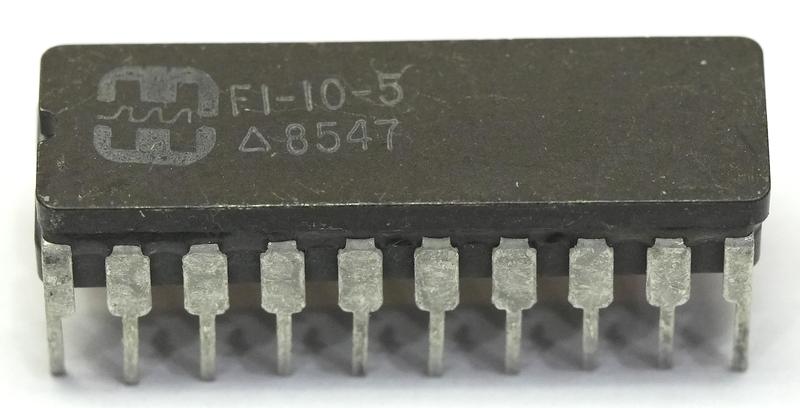
An unidentified chip from a box of old parts, no matching part number in any databook, and a quick tap with a chisel to get inside: this is Shirriff doing what he does best. The grid of tiny capacitors on the die gives the game away, and the write-up on how switched capacitors fake resistors is the real treat.

CuriousMarc found some unlabelled Harris chips and handed one over. Under the microscope it turned out to be Harris's take on the classic MF10 switched-capacitor filter, and Shirriff walks through how its capacitor array and switches build an analog filter that can be tuned with a clock.

Marc Brooker on what your latency tail costs, via Lorenz curves and Little's law

Posted by Captain Queso on Monday October 26, 2026 @12:49PM in Systems Research and Kernel Development
from the long-tail-wags-the-dog dept.

Brooker usually argues tail latency matters for users; here he argues it matters for the bill. Borrowing the Lorenz curve from economists to show how much of the mean the slowest requests account for, then running it through Little's law to get capacity, is a neat bit of cross-disciplinary theft.

An entry in Brooker's amateur statistics series asks how much each latency percentile contributes to mean latency. He uses Lorenz curves to quantify the share held by the tail, then Little's law to connect that to the concurrency and capacity you end up paying for.

How Massachusetts invented the state teachers' college

Posted by Captain Queso on Monday October 26, 2026 @12:48PM in Boston and New England
from the class-of-1839 dept.

Plenty of American state universities began life as humble teacher-training schools. Massachusetts opened the first state-funded normal schools in the country, and the long arc from teacher training academy to modern university is a quietly important piece of New England history.

Normal schools were set up to give teachers standardized training, and Massachusetts was the first state to fund them in the early nineteenth century. The piece traces how they became state colleges in the twentieth century and into the state universities of today.
Read the rest of this story (New England Historical Society)

A field guide to North America's few pink birds

Posted by Captain Queso on Monday October 26, 2026 @12:47PM in Birds
from the tickled-pink dept.

North America is stingy with pink birds, which makes each one a small event in the field. Kenn Kaufman fact-checked the list, and the fun is in how generous you have to be with the word pink before the roster gets past a handful.

Audubon rounds up the birds in North America that can fairly be called pink, from obvious cases to rare visitors and generous edge cases, with notes on where the colour comes from. The piece was fact-checked by Kenn Kaufman.

Philip Sidney, the Elizabethan king of the parenthesis

Posted by Captain Queso on Monday October 26, 2026 @12:46PM in Maps and archives
from the close-your-brackets dept.

Any Lisp programmer will feel a twinge of kinship. Sidney loved brackets so much that his romance Arcadia, unfinished at his death, breaks off partway through one, which is either tragic or the best punchline in English prose.

Florence Hazrat looks at how early modern writers thought about the parenthesis, a device Erasmus likened to little moons. Philip Sidney used them more freely than anyone, and his Arcadia famously stops mid-bracket.
Read the rest of this story (Public Domain Review)

The clock in Chester Cathedral that tells you time speeds up

Posted by Captain Queso on Monday October 26, 2026 @12:45PM in Wildcard
from the time-flies-like-an-arrow dept.

Everyone over forty has noticed that the years got shorter. A Victorian clergyman put that observation into a short rhyming poem and someone had the good sense to fix it to the front of a cathedral clock, which is about the most fitting place imaginable.

Henry Twells wrote a short poem, Time's Paces, about how time seems to creep in childhood and fly in old age, each stage of life getting a faster verb. It hangs on the clock case in the north transept of Chester Cathedral.
Read the rest of this story (Futility Closet)

Spinosaurus was more swimmer than wader, a bone-density model suggests

Posted by Captain Queso on Monday October 26, 2026 @6:54AM in Dinosaurs
from the sail-away-with-me dept.

The Spinosaurus argument has been running longer than some sitcoms: river monster, heron with delusions of grandeur, or something in between. This round brings machine learning and a large pile of skeletons to the question, and lands on the soggy side. Worth noticing is the twist in the other direction, where a few marine reptiles turn out to have kept one flipper on the beach.

Yale researchers trained a model on thousands of fossil and living-animal measurements to estimate how aquatic extinct creatures really were. It puts Spinosaurus underwater for most of its life, while suggesting some ancient sea reptiles long assumed fully marine spent real time on land.

A possible first exomoon, and it's the size of Jupiter

Posted by Captain Queso on Monday October 26, 2026 @6:53AM in Space and science news
from the that's-no-moon dept.

Exomoon claims have a habit of evaporating on closer inspection, so read this with the usual squint. Still, the setup is gloriously odd: a star, a brown dwarf circling it, and something at least Jupiter's mass circling that. Whether you call it a moon, a planet, or a taxonomy headache is half the fun.

Astronomers report evidence for an object at least as massive as Jupiter orbiting a brown dwarf, which in turn orbits a star. If confirmed it would be the first moon detected outside the Solar System, though its size makes the planet-or-moon label genuinely unclear.

The Morning Paper on what one corrupted block does to a replicated datastore

Posted by Captain Queso on Monday October 26, 2026 @6:52AM in Systems Research and Kernel Development
from the three-copies-zero-guarantees dept.

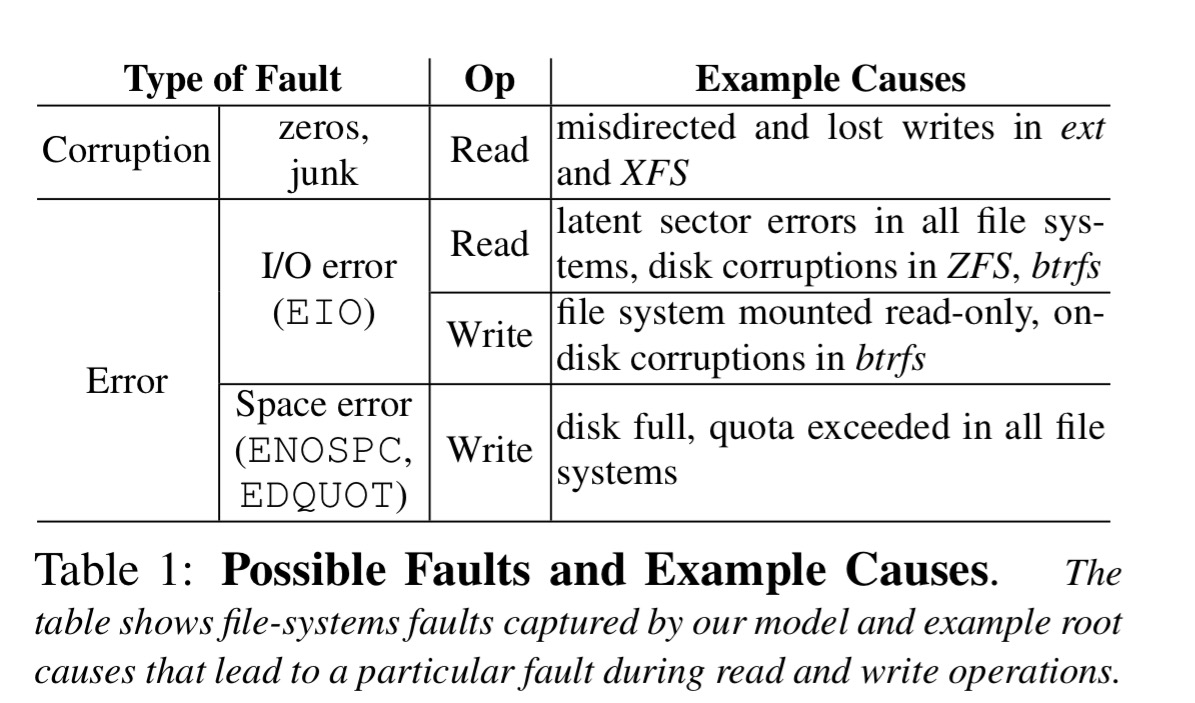
Jepsen taught everyone to fear the network partition; this FAST 2017 study points at the disk instead. Inject a single bad block or read error under a replicated store and watch how often the system shrugs, crashes, or cheerfully propagates the damage to its healthy replicas. A good reminder that replication protects you from failures you modelled, not the ones you didn't.

Adrian Colyer walks through Ganesan et al.'s analysis of how popular distributed storage systems react to a single filesystem-level error or corruption on one node. Many respond badly, from unavailability to silent data loss, despite having redundant copies to recover from.
Read the rest of this story (The Morning Paper)

The Slurptop, a home-built x86 luggable that runs on drill batteries

Posted by Captain Queso on Monday October 26, 2026 @6:51AM in Open source
from the cordless-computing dept.

Somebody needed a laptop, and instead of walking into a shop spent two months designing one around a mini-ITX board and power-tool batteries. The justification offered is 'because I can', which is the only correct one. The write-up on power delivery and the bill of materials is the meaty bit, and the trackball is a nice period touch.

A maker who had built Raspberry Pi writerdecks and cyberdecks designed a full x86 portable from scratch, with a small mini-ITX board, a custom case and power drawn from swappable tool batteries. The post covers the design choices, how the power is handled and what it all cost.
Read the rest of this story (Slurpburgers via Lobsters)

Yorktown, as four New Englanders who were there described it

Posted by Captain Queso on Monday October 26, 2026 @6:50AM in Boston and New England
from the world-turned-upside-down dept.

October 19 just went by, so here is the surrender at Yorktown through the letters and recollections of New Englanders on the scene rather than the tidy textbook version. Eyewitness accounts tend to notice the odd details historians skip. A neat bit of anniversary reading.

The New England Historical Society retells the British surrender at Yorktown in October 1781 through the accounts of four New Englanders present. The battle did not formally end the Revolution but all but settled Britain's defeat.
Read the rest of this story (New England Historical Society)

Vogelbescherming, the Dutch bird society that began as a protest against feathered hats

Posted by Captain Queso on Monday October 26, 2026 @6:49AM in Birds
from the mad-as-a-hatter dept.

Plenty of bird conservation groups have dull founding stories; this one started in 1899 because people were wearing whole stuffed birds on their heads. The interview moves on to modern work in the Netherlands, home of the godwit in the lead photo. A good look at how a European BirdLife partner actually operates.

An interview with Vogelbescherming Nederland, the Dutch BirdLife partner and the country's oldest nature organisation. It was founded in 1899 to oppose the fashion for feathers and taxidermied birds on hats, and today runs conservation work across the Netherlands.

Who is actually paying for all those AI data centres

Posted by Captain Queso on Monday October 26, 2026 @6:48AM in Economics
from the follow-the-concrete dept.

Skip the arguments about what AI will do and look at the bill of materials: chip fabs, data centres, power plants. Timothy Taylor walks through a Brookings paper on how that physical buildout is being financed, which is a calmer and more useful question than most of the discourse. Treat it as an infrastructure story, the kind economists know how to read.

Timothy Taylor summarises Stijn Van Nieuwerburgh's Brookings paper on financing the AI buildout. It treats AI as a physical capital boom, with data centres, chip plants and new power supply, and looks at where the money is coming from and how large it is by historical standards.
Read the rest of this story (Conversable Economist)

Maastricht from below: limestone mines, star forts and bunkers

Posted by Captain Queso on Monday October 26, 2026 @6:47AM in Places to visit
from the going-underground dept.

Most visitors see Maastricht's squares and cafes; Geoff Manaugh checked into his hotel and vanished beneath the city. Eight centuries of limestone quarrying, 17th-century countermine tunnels and Cold War bunkers all sit within an afternoon's walk. A good itinerary for anyone who prefers a torch to a tour bus.

BLDGBLOG's author spent a short stopover in Maastricht touring its underground sites, from medieval limestone mines to the tunnels of the Casemates Waldeck star fortifications and later NATO bunkers. The post is mostly photographs with notes.

Flap books that turned Adam into a mermaid, then a reminder of death

Posted by Captain Queso on Monday October 26, 2026 @6:46AM in Maps and archives
from the lift-here-for-mortality dept.

Long before pop-up books were about trucks, the flap book was about transformation and, inevitably, the grave. Lift a flap and Adam becomes Eve, a lion becomes a griffin, and the moral arrives right on schedule. The Public Domain Review's scans make the mechanism easy to follow.

The Public Domain Review gathers pages from early 19th-century metamorphosis flap books, where folding paper panels transform one figure into another. They were meant for children, mixing play with lessons about mortality.
Read the rest of this story (Public Domain Review)

How katsuobushi, the world's hardest food, is still made by hand

Posted by Captain Queso on Monday October 26, 2026 @6:45AM in Wildcard
from the fish-as-hard-as-wood dept.

A workshop founded in 1882 still smoke-dries bonito over a hand-tended fire, a method only a handful of places keep alive. Watching six months of boiling, smoking, patching and mould turn a fish into something you could build furniture from is oddly calming. The ideal idle-moment video.

A short film from a fifth-generation workshop in Nishi-Izu shows the traditional process for katsuobushi: filleting and boiling bonito, smoke-drying it more than ten times over wood, fermenting it with koji mould and sun-drying it for months until it is rock hard.
Sunday, October 25, 2026

A toothed Jurassic bird that had already given up on flying

Posted by Captain Queso on Sunday October 25, 2026 @5:47PM in Dinosaurs
from the grounded-before-it-was-cool dept.

Birds spent the Jurassic barely getting the hang of flight, and here is one that apparently decided the whole business was overrated. If the reading holds, flightlessness turns up almost as soon as flight does, which makes the ostrich look less like a late dropout and more like a family tradition. Teeth and a grasping claw included, for the nostalgic.

A 150-million-year-old fossil bird from China pairs sharp teeth and a dinosaur-style claw with a build suited to running about on the ground. Its describers argue it is the oldest known case of a bird lineage losing flight, much earlier than anyone assumed.

Rubin's stand-in engineering camera turns out a gorgeous Seagull Nebula

Posted by Captain Queso on Sunday October 25, 2026 @5:46PM in Space and science news
from the even-the-test-pattern-is-pretty dept.

Before the giant LSST camera went in, Rubin ran for a few weeks on a small commissioning camera whose whole job was to shake down the plumbing. Its leftover frames are now being released, and the Seagull Nebula shot shows what the telescope can do even when the instrument on the back is the understudy.

The Vera Rubin Observatory used its Commissioning Camera for about seven weeks in 2024 to test equipment and procedures before the main camera arrived. NOIRLab has now published that camera's image of the Seagull Nebula, a sprawling cloud of glowing gas.

JP Harris trades honky-tonk for an old Appalachian songbook

Posted by Captain Queso on Sunday October 25, 2026 @5:45PM in Folk and Americana
from the old-time-is-the-new-time dept.

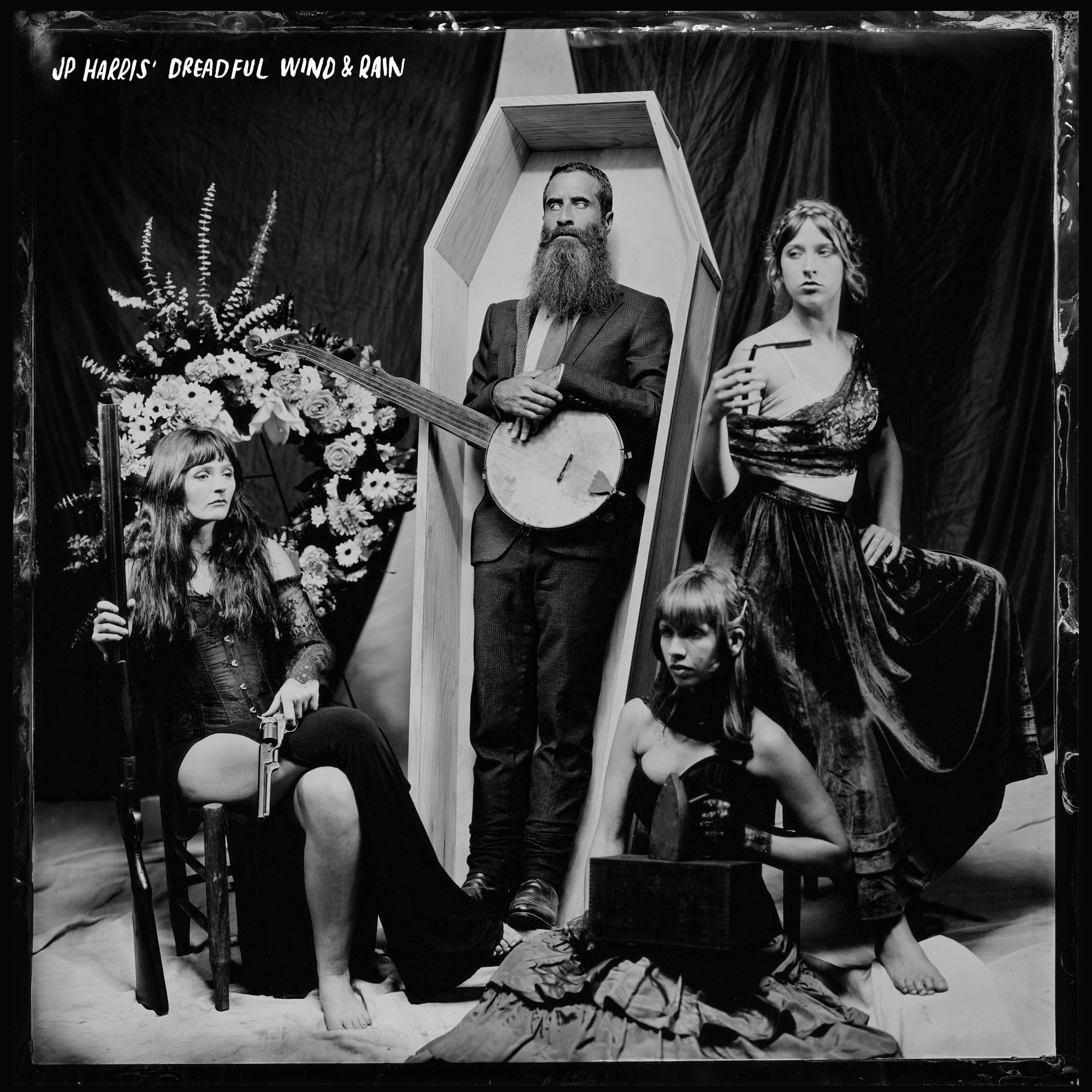
A honky-tonk songwriter going back to the tunes that made him want to play in the first place is a familiar move, but it is usually done with less commitment than this. No Depression's review hears him serving the songs rather than restyling them, which is exactly what the old-time crowd tends to want.

On his sixth album, Shaving A Dead Man, JP Harris sets aside the hard-edged country of his earlier records to work through traditional Appalachian old-time material that shaped him early on. No Depression reviews it as a respectful, intuitive reading of a centuries-old repertoire.

Taking apart Fast Food Tycoon 2, a forgotten 2001 pizza empire sim

Posted by Captain Queso on Sunday October 25, 2026 @5:44PM in Open source
from the extra-cheese-extra-Ghidra dept.

Somebody picked a bargain-bin business sim at a mall in 2004 and, twenty years on, cracked it open to see how its little isometric city works. The fun part is the method: Ghidra for the four thousand functions, live memory peeking to map cash and camera state, and a patched message loop to drive the game from outside.

A developer decompiled Fast Food Tycoon 2, an obscure 2001 game about building a pizza chain in a simulated city, using Ghidra plus a coding-agent loop. The write-up covers indexing the decompiled code, reading the running game's memory to identify values, and injecting commands into its UI thread to explore how the world is drawn.

HoliPaxos: making MultiPaxos boringly predictable

Posted by Captain Queso on Sunday October 25, 2026 @5:43PM in Systems Research and Kernel Development
from the slow-node-in-the-room dept.

Charapko admits he keeps trying to leave state machine replication and keeps getting dragged back. This one leaves the protocol's core alone and goes after the tail: what happens to throughput when one replica is sluggish, the network splits, or log compaction kicks in at a bad moment. Worth it for anyone who has watched a healthy Paxos cluster stutter for no visible reason.

Aleksey Charapko introduces his VLDB 2025 paper, which combines several independent optimisations to classic MultiPaxos so that its performance stays steady under slow nodes, partitions and log-management work, without changing the protocol's fundamentals.
Read the rest of this story (Aleksey Charapko)

Why world farm productivity growth stalled after 2011

Posted by Captain Queso on Sunday October 25, 2026 @5:42PM in Economics
from the more-crop-per-drop dept.

Timothy Taylor in his natural habitat: one report, one set of charts, no sermon. The interesting bit is the accounting, where productivity is whatever output growth is left after land, water and inputs are tallied, and that residual has been sagging for over a decade just as the world needs it most.

Taylor walks through Virginia Tech's 2026 Global Agricultural Productivity report. Farm output growth once came mostly from more inputs, then from productivity gains by the 1990s, but productivity growth has slowed since around 2011; the report looks at regenerative practices as one route back.
Read the rest of this story (Conversable Economist)

Pin-striped Tit-Babblers caught snacking on Brown Kurrajong fruit near Ipoh

Posted by Captain Queso on Sunday October 25, 2026 @5:41PM in Birds
from the babbler-with-a-sweet-tooth dept.

The Bird Ecology Study Group keeps doing the patient work of noting exactly who eats what, which is how field guides eventually get better. A mostly insect-eating babbler adding another fruit to its menu, recorded at Kledang-Saiong, is about as close to home as these records get.

An observer at the Kledang-Saiong Forest Reserve in Perak recorded a pair of Pin-striped Tit-Babblers eating the fruit of Commersonia bartramia, adding to a list of fruits this largely insectivorous species has been seen taking, including two Macaranga species.
Read the rest of this story (Bird Ecology Study Group)

Paul Revere and the Massachusetts Charitable Mechanic Association

Posted by Captain Queso on Sunday October 25, 2026 @5:40PM in Boston and New England
from the silversmiths-of-the-world-unite dept.

Revere gets remembered for one night's ride, but he spent a lot more time on the dull and useful business of organising Boston's craftsmen. The Mechanic Association was part guild, part mutual-aid society, and later a sponsor of big industrial fairs, a nice reminder of how artisan Boston looked after itself.

The New England Historical Society traces the late-18th-century founding of the Massachusetts Charitable Mechanic Association, a Boston body set up to promote the city's many trades and to help members in hard times, with Paul Revere among its organisers.
Read the rest of this story (New England Historical Society)

Atlantic City's sand sculptors, photographed 1880 to 1920

Posted by Captain Queso on Sunday October 25, 2026 @5:39PM in Maps and archives
from the high-tide-is-the-critic dept.

Before boardwalk amusements got loud, people paid a coin to look at elaborate figures carved out of wet sand, knowing the sea would take them by morning. The Public Domain Review's selection preserves an art form whose whole premise was not being preserved.

A gallery of old photographs of the ornate sand sculptures that artists built on Atlantic City's beaches in the decades around 1900, a popular seaside attraction of the period.
Read the rest of this story (Public Domain Review)

A Navajo weaver renders the 555 timer chip as a rug

Posted by Captain Queso on Sunday October 25, 2026 @5:38PM in Wildcard
from the warp-and-weft-and-flip-flop dept.

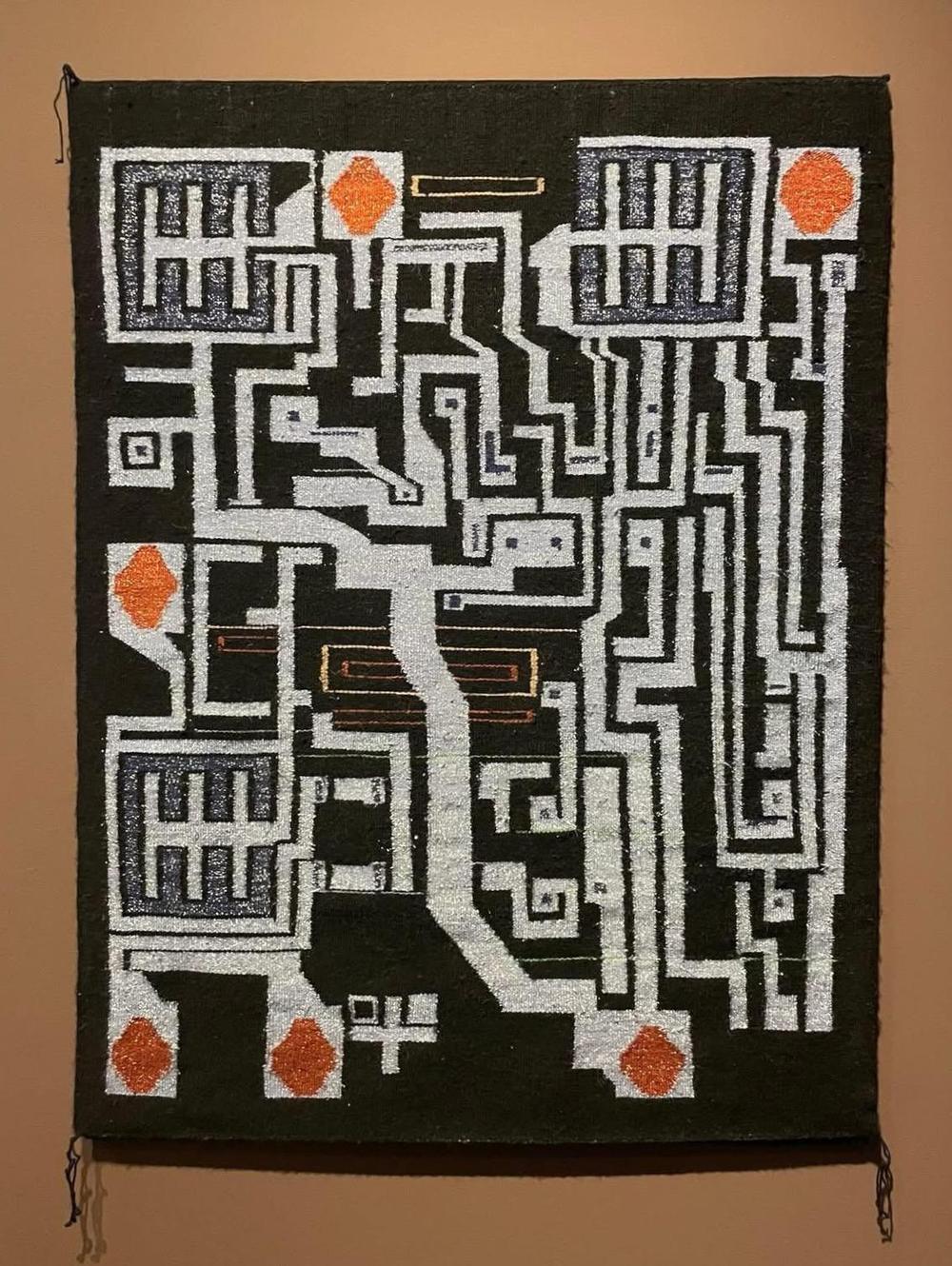
Marilou Schultz has woven die photographs of chips before, and this time it is the 555, possibly the most-sold integrated circuit ever. Ken Shirriff does what Ken Shirriff does and explains which bit of the rug is which bit of the silicon, so you can admire the comparators and the weaving at the same time.

Diné weaver Marilou Schultz has made a weaving of the 555 timer's internal circuitry in white lines and orange diamonds on black. Ken Shirriff explains how the chip works and maps the rug's patterns onto the transistors and resistors of the die.

Older stories → the october 2026 archive